Do you dream of getting some fresh air and R&R in a natural setting? Head for one of France’s national parks, each one more beautiful than the last!
Book a train ticket
Book a train ticket
From the Mercantour to the Calanques, the Pyrenees to the Cévennes, hop on board to learn more about national parks that can be reached by train.

National parks in France that are accessible by train
- The Mercantour: a paradise for groundhogs and chamois
- The Calanques: white cliffs and turquoise waters
- Port-Cros: a Mediterranean Eden
- The Pyrenees: majestic peaks and valleys
- The Cévennes: forests, gorges and limestone plateaus
- The Ecrins: summits and glaciers
- The Vanoise: a jewel of the high mountains
- The National Forest Park: between Champagne and Burgundy
Immerse yourself in nature
France’s national parks, exceptional areas on land and sea, are protected natural areas that are recognised in mainland France and abroad. They preserve the local flora and fauna and offer visitors guided tours and a range of other activities, making them the perfect place to get in touch with nature.
To reach these national parks, why not do your part to preserve the environment by using a clean mode of transport? Trains are one of the most eco-friendly ways to travel. For each kilometre travelled, a train emits up to 50 times less CO2e than a car(1) and 80 times less than an airplane(2)!
The Mercantour: a paradise for groundhogs and chamois
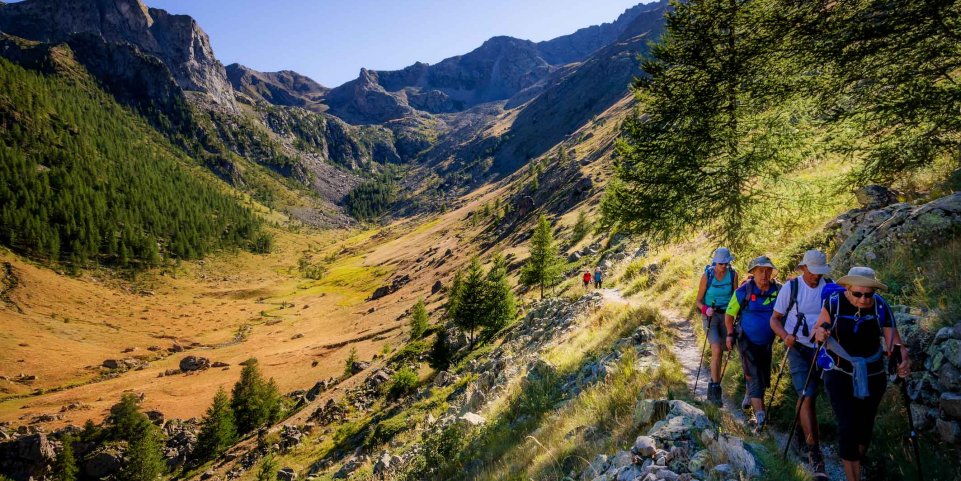
The Mercantour National Park is located just an hour away from Nice and straddles the Alpes-Maritimes and the Alpes de Haute-Provence. This mountain range on the Italian border reaches an elevation of 3143 metres, atop the Cime du Gélas. The park is dotted with lakes and includes eight postcard-worthy valleys: Ubaye, Bévéra, Vésubie, Roya, Tinée, Cians, Var and Verdon. So many different species of plants and animals live here that scientists have not yet been able to identify them all. Spend some relaxing time on the many hiking trails in this paradise for groundhogs, chamois and Alpine ibex.
>> France’s most beautiful hikes
Did you know? To learn more about the plants and animals in the region, download the Biodiv’Mercantour app, which was created by the park.
Getting there Take a train to Nice, then one of the Lignes d’Azur buses that stop in each valley. You can also take the Train des Merveilles (the Nice-Cuneo line) or the Train des Pignes (the Nice-Digne-les-Bains line).
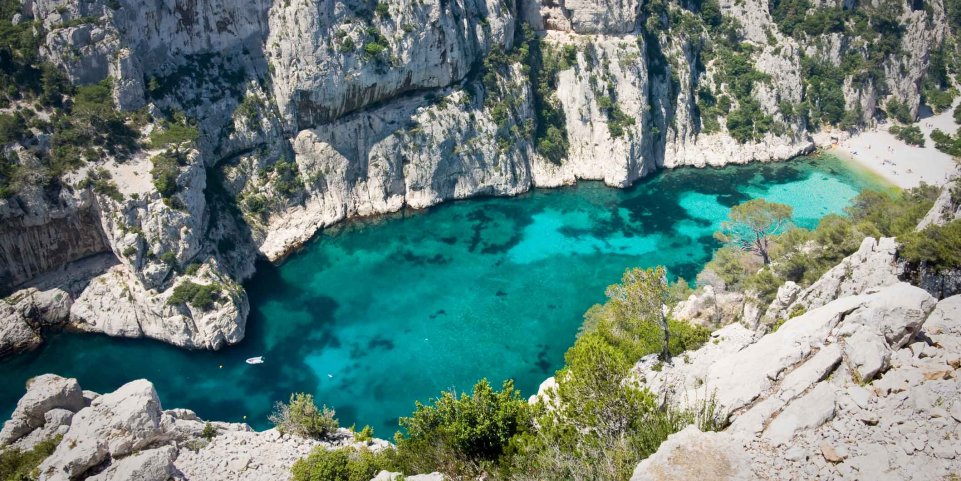
The Calanques: white cliffs and turquoise waters
With their idyllic waters beckoning you in for a swim and their dazzlingly white limestone cliffs, the Calanques are like something out of a fairy tale. Carved into the rock, from Marseille to Cassis and La Ciotat, they are home to charming beaches and beautiful cottages surrounded by pine trees and the garrigue. During your visit, you can choose between hiking, climbing, swimming, diving, cruises and kayaking, all under the bright southern sun. To make sure you have all the necessary information close at hand, download the park’s app, “Mes Calanques”.
>> Activities in the Calanques of Marseille
Did you know? The sea depths of the Calanques hold shipwrecks dating back to Antiquity. The oldest is the Ecueil de Miet 3, which was transporting amphorae and cups for drinking wine.
Getting there Take a train to Marseille, Cassis or La Ciotat.

Port-Cros: a Mediterranean Eden
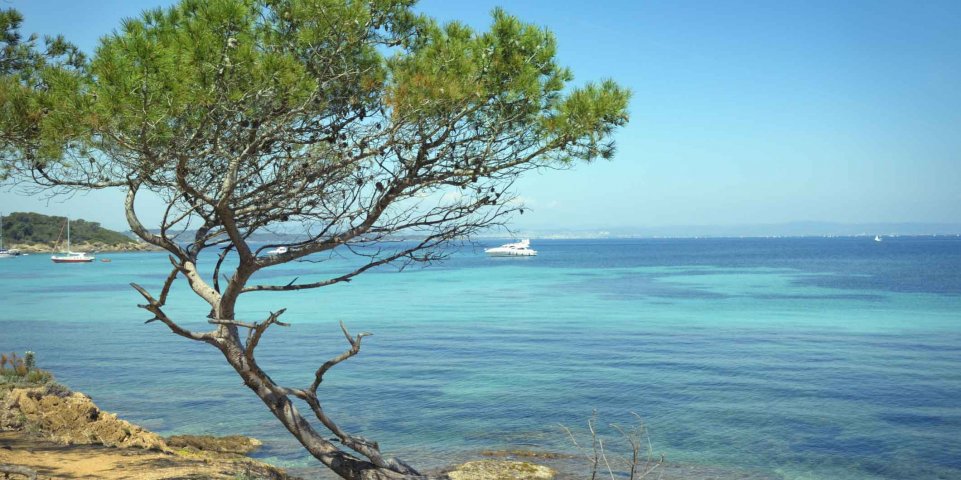
With its crystal-clear waters and sea depths where Posidonia seagrass waves in the current and multicoloured fish make their home, the Port-Cros National Park is heaven for fans of snorkelling and scuba diving. The heart of the park is the islands of Porquerolles and Port-Cros, across the water from Hyères, on the mainland. Grab your fins, mask and snorkel, and follow the underwater route of La Palud. Along the path, you will be greeted with a festival of colours, along with wrasse, anemones and starfish. The underwater portion of the park is well worth visiting, but so is the part on land, with its steep cliffs overlooking the Mediterranean.
Did you know? The park is in charge of the Pelagos Sanctuary for Mediterranean Marine Mammals.
Getting there Take the train to Hyères, then take the 67 bus to the Tour Fondue stop, in Giens. From there, you can take a boat to the island of Porquerolles.
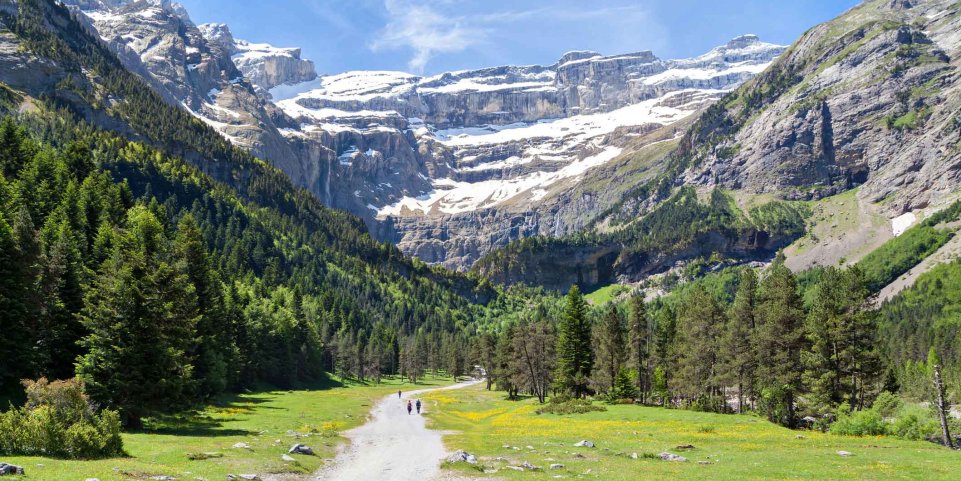
The Pyrenees: majestic peaks and valleys
The Pyrenees National Park, located on the Spanish border south of Pau and Tarbes, offers spectacular mountains and valleys: Ossau, Cauterets, Azun, Aspe, Luz-Gavarnie and Aure. The highest point of the park is the Vignemale, at an elevation of 3298 metres. The park is home to many natural wonders, such as the Gavarnie cirque, the Pic du Midi d’Ossau and the waterfalls of the Cauterets valley. If you are lucky, you might see wildlife such as golden eagles, griffon vultures, brown bears, Iberian ibex and groundhogs. You are most likely to glimpse these wild animals while hiking. By night, you can observe the stars and even the Milky Way.
Did you know? The park has created interpretive trails with the “Tourism and Disability” certification: namely, the trails of La Vallée du Tech, Boucharo-Gavarnie, and Des Arbres – Etsaut.
Getting there You can reach the park from the train stations in Pau, Tarbes, Oloron and Lannemezan. From there, you can travel to the different valleys by bus.

The Cévennes: forests, gorges and limestone plateaus
To discover these mountains south of the Massif Central, head to the train stations in Nîmes, Mende or Alès. Between Mont Aigoual, the Causse Méjean, which includes the Gorges du Tarn and the Gorges de la Jonte, Mont Lozère, the valleys and the Piemont Cevenols, this park is rich with forests, cliffs, gorges, steppes and humid zones. Otters, white-clawed crayfish and beavers live in the water, while wild boars and deer gallop through the woods. During your visit, in addition to hiking, you can also try via ferrata, archery, canoeing and climbing.
Did you know? The park celebrated its 50th anniversary in 2020, and hosted a variety of activities to mark the occasion.
Getting there The park is accessible from the train stations in Nîmes, Mende and Alès, as well as Villefort, Marvejols and Génolhac. From there, you can take the bus that runs between Mende and Florac, or the one between Alès and Florac.
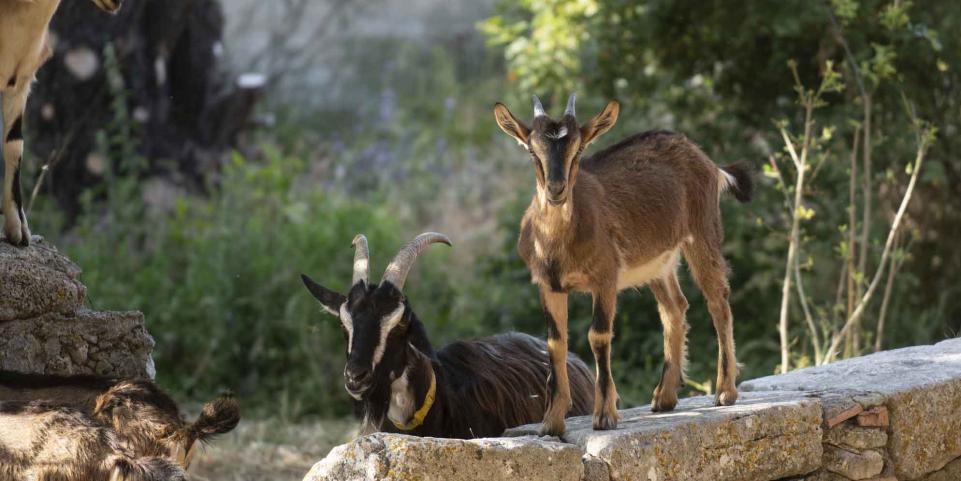
The Ecrins: summits and glaciers
Are you a fan of peaks? The Ecrins National Park, located between Grenoble, Gap and Briançon, is home to no fewer than 150 summits. It straddles the Isère and the Hautes-Alpes, and has seven valleys within its borders: Briançonnais, Vallouise, Embrunais, Champsaur, Valgaudemar, Valbonnais and Oisans. The park is a mosaic of glaciers, peaks, alpine meadows, lakes and rivers, stunningly beautiful landscapes where chamois, ibex and groundhogs run free. For athletic types, the Grand Tour des Ecrins is an iconic Alpine trail that takes you from one summit to the next.
Did you know? The park’s glaciers are home to living organisms such as single-cell algae, glacier fleas and springtails.
Getting there The park can be reached from the train stations in Grenoble, Gap or Briançon, Embrun, Mont-Dauphin and L’Argentière-la-Bessée. From Grenoble, you can take the bus to Le Bourg d’Oisans, then La Bérarde or Briançon.
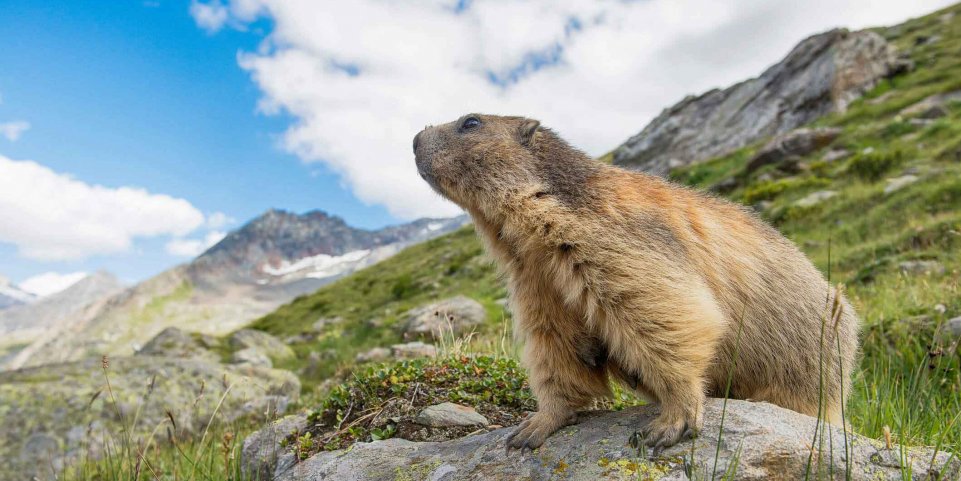
The Vanoise: a jewel of the high mountains
Get away from it all in the Vanoise National Park, in the Savoie! The park is located between the valleys of La Maurienne and La Tarentaise, and includes eight summits, the tallest of which is La Grande Casse, at 3855 metres. From glaciers to high mountain passes, forests, heaths, prairies and lakes, nature comes in many beautiful forms in this park, to the delight of the groundhogs, chamois and ibex. As you hike, you can follow in the footsteps of the black grouse or the rock ptarmigan, rare birds that live at high elevations.
Did you know? The park is also home to false musk orchards, a protected species, as well as bladder gentians, which have distinctive blue flowers.
Getting there The park can be reached from the train stations in Bourg Saint Maurice, Modane and Moûtiers From there, you can travel to the various communes of the park by bus.
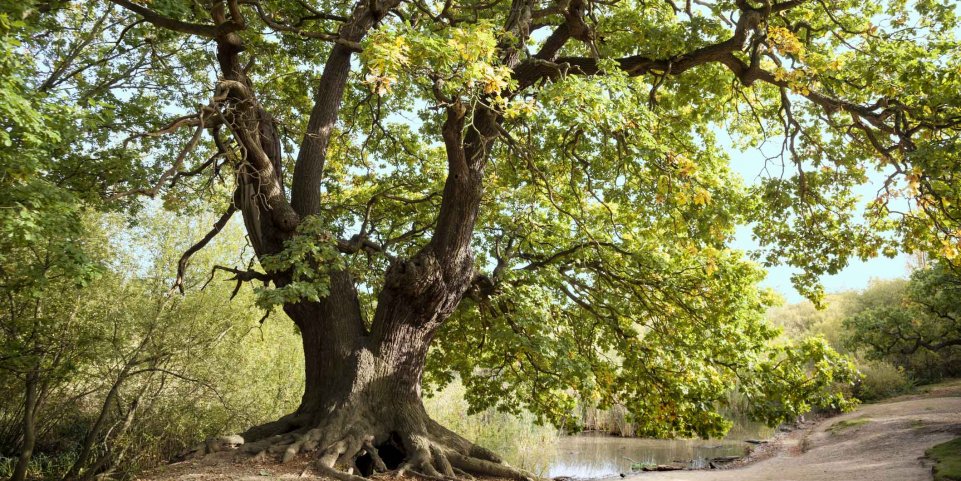
The National Forest Park: between Champagne and Burgundy
Do you love trees? In eastern France, between Champagne and Burgundy, the National Forest Park protects hardwood forests that have been around since the French Revolution. It is home to fox and deer, and also rare black storks and wildcats. This is the perfect place to reconnect with nature. With its hundreds of kilometres of hiking trails you can walk in the company of a donkey, as well as engage in tree-climbing activities.
Did you know? In the park, you can observe protected flowers such as spring snowflakes, with delicate white bells, and Lady’s-slipper orchids, whose lower petals are shaped like a shoe.
Getting there You can reach the park from the train stations in Dijon, Montbard, Chaumont, Langres and Is-sur-Tille. In the Côte d'Or, the park can be reached on the 54, 50, 55 and 56 bus lines.
Legal notices
(1) Trains emit up to 50 times less than cars: this calculation is based on CO2e emissions of a shared car (average occupation of 2.2 passengers) as listed in the ADEME Base Carbone, which is 88 g of CO2e/km/passenger, divided by the average CO2e emissions of a high-speed train (TGV, Lyria, OUIGO) as listed in the 2019 energy consumption tables, which is 1.73 g of CO2e/km/passenger. (Source: Réseau de transport d’électricités (Rte), 2019) et fréquentations, 2019).
(2) Trains emit 80 times less than airplanes: this calculation is based on the CO2 emissions of an airplane as listed in the ADEME Base Carbone (Airplane - passengers - 101-220 seats, trips of <500 km, 500-1000 km and short hauls without drag), which is 141 g of Co2e/km/passenger, divided by the average CO2e emissions of a high-speed train (TGV, Lyria, OUIGO) as listed in the 2019 energy consumption tables, which is 1.73 g of Co2e/km/passenger (Source: Réseau de transport d’électricités (Rte), 2019) et fréquentations, 2019).