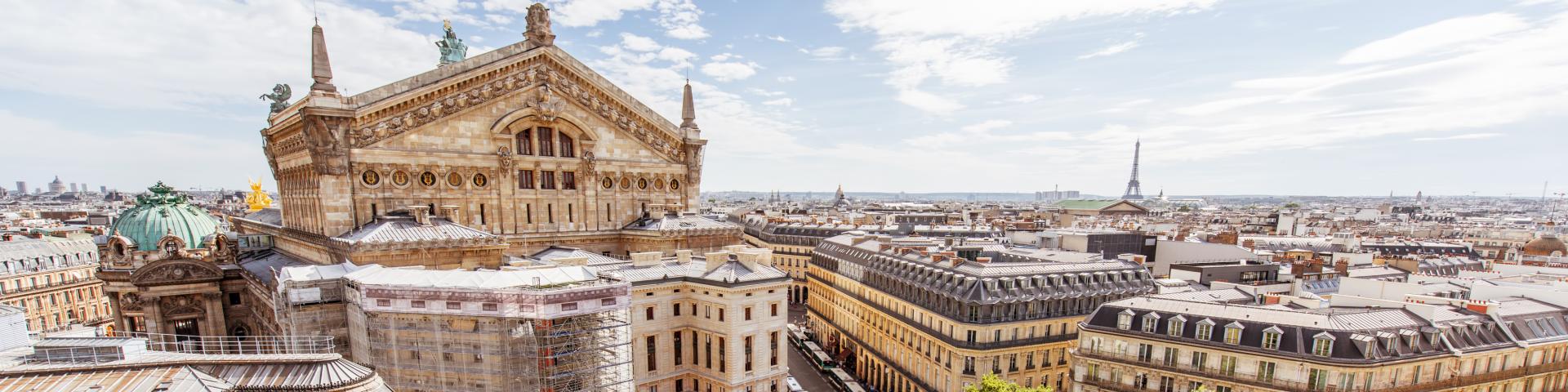
Are you visiting Paris for the first time? We have chosen the top 10 sites you must see at least once in your life!
Book a train ticket
Book a train ticket
Paris is a historic city filled with world-famous monuments, museums and neighbourhoods. From the moment you set foot in the city, you will be immersed in French history, settings you will recognise from famous films and the lively ambiance of the City of Light. To get the measure of the city during your first trip to Paris, we suggest starting with these can’t-miss sites.
>> Book your train ticket for Paris
Top 10 sites for your first trip to Paris

The Eiffel Tower
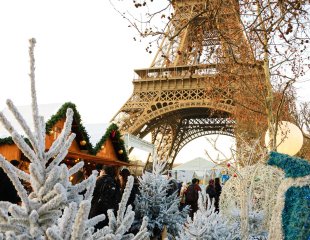
The Eiffel Tower was built for the 1889 World’s Fair by the famous Gustave Eiffel, and has become a global symbol for Paris and all of France!
Visiting
When visiting the three levels of the Iron Lady, you can choose between taking the lift or the stairs.
- At the first level, at a height of 57 m, you can check out the impressive view through the glass floor and treat yourself to a drink at the 58 Tour Eiffel restaurant.
- At the second level, at a height of 115 m, you will enjoy a stunning panoramic view and can even dine at the elegant Michelin-starred restaurant Le Jules Verne.
- At the third level, at a height of 276 m, you will be able to visit the office of Gustave Eiffel and Thomas Edison (in the form of wax figures.) You can enjoy a magnificent view of all of Paris from this indoor space. 3 metres more takes you to the highest point, an outdoor observation deck.
The Eiffel Tower by the numbers
- Height: 324 m
- 5 elevators from the ground floor to the 2nd level, and 2 from the 2nd level to the top
- 10,100 tons of metal beams
- 4 pillars forming a square that measures 125 m on each side
- Construction began on January 28th, 1887 and was finished on March 31st, 1889, for a total of 2 years, 2 months and 5 days
For a unique experience
Visit the Eiffel Tower by night! It is open until 11:45 pm, and until 12:45 am in summer (but keep in mind that the last departure for the summit leaves 1 hour and 45 minutes before closing time.)
- The Eiffel Tower
- Champ de Mars, 5 Avenue Anatole France
- 75007
- Paris
- France
- 08 92 70 12 39
- Opening hours: Open every day from 9:30 am to 6:30 pm and between June and August from 9:00 am to 12:30 am.
- Price info: Ticket for the lift or the stairs to the 2nd level Lift ticket to the top: you will take two separate lifts to reach the top. There are e-tickets for the top (by lift) or to the 2nd level (by lift or by stairs), which can be reserved up to 2 months in advance and up to 3 hours before the visit. Stairs/lift ticket to the top: take the stairs to the 2nd level, then the lift to the top. For sale only on site.
- How do you get there? Metro station Trocadero (line 9) - Metro station Bir-Hakeim (line 6) - Metro station Ecole Militaire (line 8.) RER C Champs de Mars - Tour Eiffel , Tour Eiffel bus stop 82, 30, 42, 72 - Champs de Mars stop: 69, 86 Batobus Tour Eiffel
The Louvre
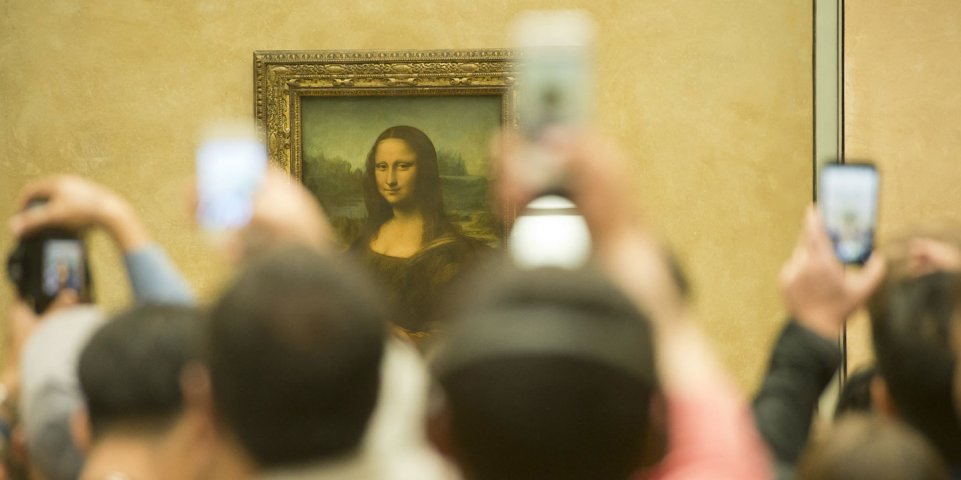
The Louvre is without a doubt one of the most famous museums in the world, but why?
- Is it because of its incredible collection of art, including Leonardo de Vinci’s Mona Lisa, David’s enormous paintings, the Winged Victory of Samothrace, the Venus de Milo, Delacroix’s Liberty Leading the People, the Egyptian antiquities, and the crown jewels?
- Because it was once the Palace of the Kings of France, located in the heart of Paris?
- For its glass pyramid, designed by Chinese-American architect Ieoh Ming Pei, which caused a scandal when it was inaugurated in 1988?
- Or for the fantastic view of the Jardin des Tuileries, the Champs-Elysées and the modern buildings of La Défense, visible from its courtyard?
There are so many reasons to visit the Louvre!
The Louvre in numbers (astronomical ones)
- The Louvre is the most popular museum in the world, attracting more than 10 million visitors per year.
- 403 exhibition rooms
- 8 departments: “Egyptian Antiquities” (more than 66,000 pieces), “Near Eastern Antiquities” (more than 137,000 pieces), “Greek, Etruscan and Roman Antiquities” (more than 68,000 pieces), “Islamic Art” (more than 15,000 pieces), “Paintings” (more than 12,000 pieces), “Sculptures” (more than 6000 pieces), “Decorative Arts” (more than 23,0000 pieces), and “Prints and Drawings” (more than 122,000 pieces), as well as the “Rothschild Collection” (more than 86,000 pieces) and the “Chalcography” section (more than 14,000 engraved copper plates).
- 2 other Louvre locations: Abu Dhabi and Lens
- 1190: construction of the palace for King Philippe Auguste - 1793: opening of the museum
For a unique experience
The Louvre also has a tactile gallery, where you can touch some twenty different plaster and resin moulds of sculptures whose originals are displayed at the Louvre. The visit based on the theme of representations of the body presents some twenty works of various sizes, offering you a chance to experience art in a different way.
- The Louvre Museum
- 150 Rue Saint-Honoré
- 75001
- Paris
- France
- 01 40 20 50 50
- Opening hours: Open every day except Tuesday, from 9 am to 6 pm (9:45 pm on Wednesdays, Fridays and the first Saturday of the month)
- Price info: Free the first Sunday of every month from 6 pm to 9:45 pm. Free for children under the age of 18, for residents of the European Economic Area ages 18-25 and on Fridays from 6 pm to 9:45 pm for those ages 18-25 The Louvre ticket gives you same-day access to the temporary exhibits and 48-hour access to the Eugène-Delacroix museum.
- How do you get there? By metro: lines 1 and 7, Palais-Royal/Musée du Louvre station; line 14, Pyramides station By bus: no. 21, 24, 27, 39, 48, 68, 69, 72, 81, 95
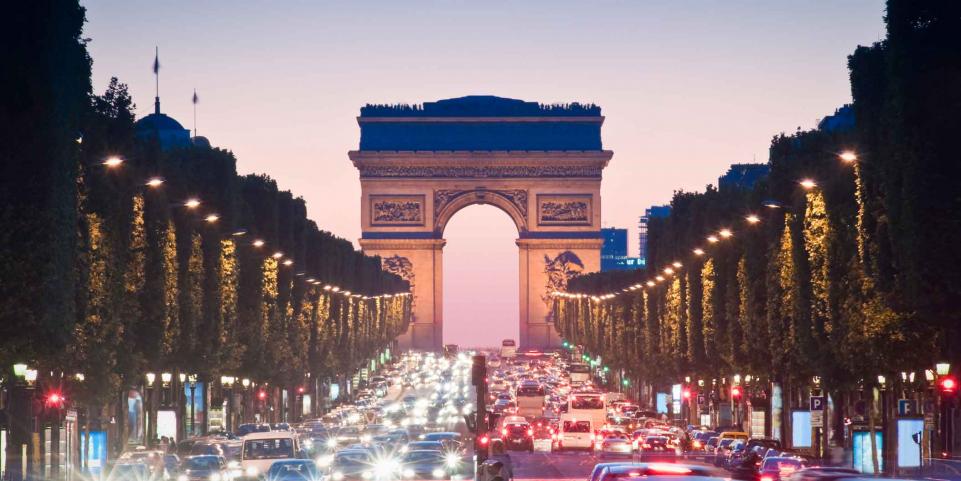
Walk up the Champs-Elysées to the Arc de Triomphe
The Champs-Elyées, the most beautiful and most famous street in the world, is 70 metres wide and two kilometres long, and marks one of the city’s most historic paths, from Place de la Concorde to the Arc de Triomphe.
The lower part of the Champs-Elysées is lined with gardens. As you walk up the street, you will pass the Petit and the Grand Palais, the Palais de la Découverte, the Rond-Point theatre and the Théâtre des Champs-Elysées, then cinemas and elegant boutiques for well-known luxury brands, famous restaurants such as Fouquet’s Paris and the Lido cabaret, before finally reaching the Publicis Drugstore, a 1926 establishment open until 2 am that is home to a newsstand, pharmacy, restaurant and gourmet grocer.
The history of the Champs-Elysées
1667: Louis XIV had a path built for his courtesans leading from the Louvre to the royal estate of Saint-Germain-en-Laye. André Le Nôtre, a landscape architect and gardener, was charged with designing the “Avenue des Tuileries” (later called the Grand Cours, the Avenue de Neuilly and the Route de Saint-Germain), running through the woods and marshes on the banks of the Seine. The grandiose view of the street is a spectacular sight.
1694: the avenue was called the “Champs-Elysées.” The name wasn’t made official until 1709. In Greek mythology, the Elysian Fields are the paradise where heroes and virtuous people are sent after their death.
Paris from the top of the Arc de Triomphe
At one end of the Champs-Élysées, you can climb to the top of the Arc de Triomphe for a stunning view of the Champs-Élysées and the city of Paris.
- The Arc de Triomphe
- Place Charles de Gaulle
- 75008
- Paris
- France
- Opening hours: Open every day from 10 am to 10:30 pm from October to March, and to 11 pm from April to September
- Price info: Free for children under the age of 18 (with their family), and for EU citizens and legally recognized non-European residents of France ages 18-25
- How do you get there? Lines 1, 2, 6 and RER A, Charles-de-Gaulle-Etoile station / Lines 22, 30, 31, 52, 73, 92 and Balabus // then take the tunnel near the Champs-Elysées or Grande Armée exits
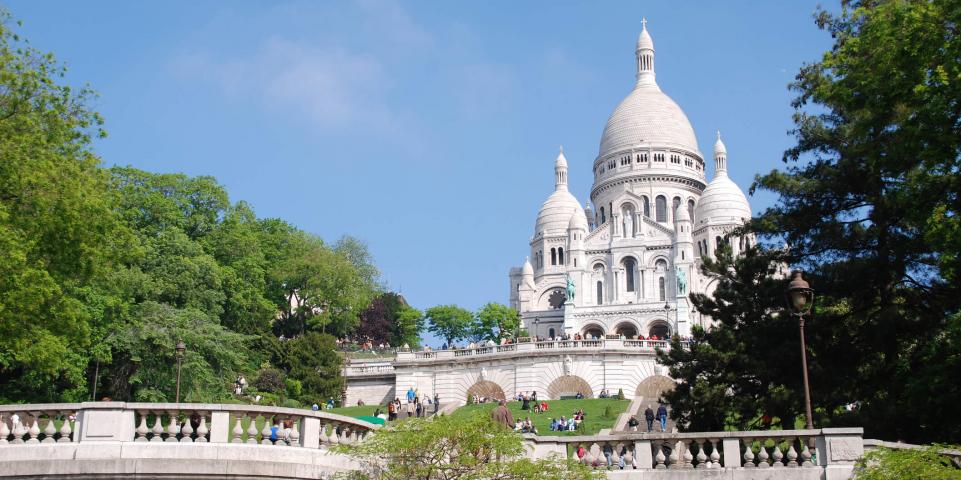
Sacré Coeur and Montmartre
The Butte Montmartre, located in Paris’ 18th arrondissement, is one of the city’s most charming, authentic quarters. The picture-perfect village has been made very famous through its history, cinema and paintings. Visit the Montmartre museum to learn more, before walking past the grapevines, having your portrait done on Place de Tertre and finally settling down on the steps of Sacré-Coeur to enjoy the view of the city. We suggest taking the funicular up the hill (using a metro ticket) and the stairs back down: the top of the hill is 222 steps from Louise Michel Square.
The Sacré-Cœur Basilica of Montmartre
The first church was built on the hill in the 6th century. It was not until 1923 that the current basilica opened its doors, at an elevation of 130 metres, plus an additional 83 metres thanks to its dome. The dome can be seen from a long way off, making it a landmark for many tourists. It is the second most popular religious monument in Paris.
The history of Montmartre
- 1860: Montmartre became part of Paris.
- 1871: Montmartre became the headquarters for the Paris Commune.
- In the 19th and 20th centuries, many artists lived and worked in Montmartre: Renoir, Suzanne Valadon, Utrillo, Pissarro, Toulouse-Lautrec, Van Gogh, Modigliani, Picasso and more.
Montmartre sights that are not to be missed
- Studio 28: A legendary cinema that opened in 1928, with its own café and covered terrace. Jean Cocteau, who was the cinema’s patron in 1950, helped decorate the theatre’s interior.
10 Rue Tholozé, 75018 Paris - The Wall of Love: THE must-see spot for lovers. A wall with “I love you” written in 250 different languages, created by Frédéric Baron in 2000.
Square Jehan Rictus, 75018 Paris - Villa Léandre: A beautiful hidden impasse lined with English-style houses.
From Avenue Junot, 75018 Paris - The Montmartre cemetery: Here you can find the tombs of Degas, Berlioz, Offenbach, “La Goulue”, Dumas, Truffaut and many more.
20 Avenue Rachel, 75018 Paris - The Café des 2 Moulins: the café where Amélie worked in the film by Jean-Pierre Jeunet.
15 Rue Lepic, 75018 Paris
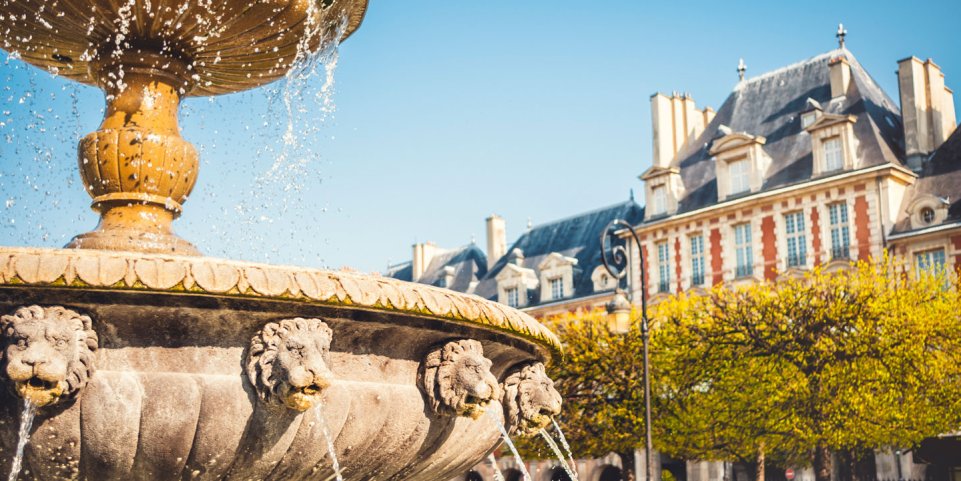
A stroll through Le Marais
The historic neighbourhood known as Le Marais is located in Paris’ 3rd arrondissement. Your walk through this area filled with romantic sidewalk terraces, festive bars and restaurants, artsy spaces and trendy boutiques will take you to Place des Vosges and its Victor Hugo house, the Hôtel Salé in front of the Picasso museu, and the Carnavelet museum.
By way of anecdote
- 1190-1209: agricultural properties from large ecclesiastical estates were established in this district inside the Philippe-Auguste Wall.
- Late 17th century: Le Marais was urbanized after the marsh dried up.
- 1612: Henri IV had the Place Royale (now the Place des Vosges) built, with large private mansions for the aristocracy.
- 19th century: Balzac described it as inhabited by people of independent means, employees and civil servants: in short, the petite bourgeoisie.
- 20th century: it is now known as the Jewish quarter, the LGBT quarter, a trendy part of town, a charming historic district, a lively neighbourhood and much more.
Worth noting:
In 1964, the Festival du Marais pushed André Malraux to make Le Marais the first “preserved sector”, home to numerous museums and historic sites.
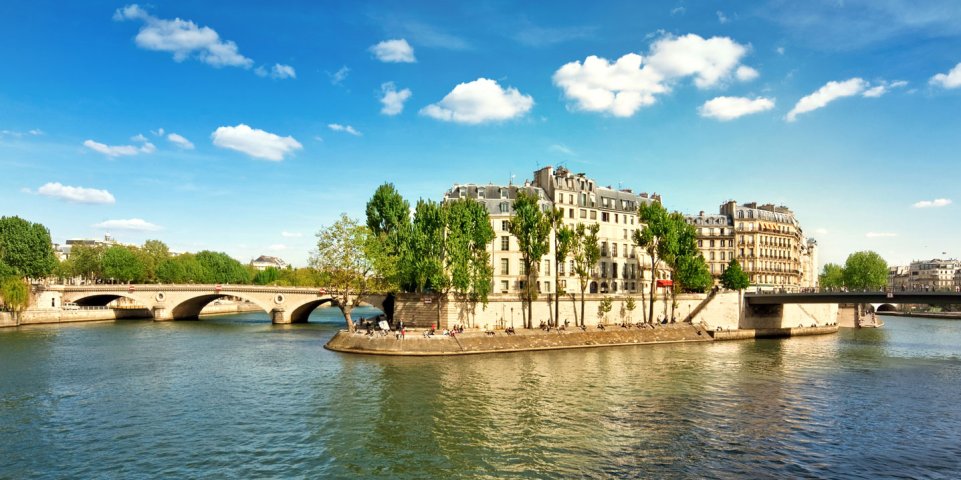
The Ile de la Cité, in the heart of Paris
The Ile de la Cité, between the two branches of the Seine, is the ancient birthplace of the city of Paris, originally called Lutecia. It is a charming historic place for a walk: cross the Ponte Neuf, which has been featured in many films, then stop in to Sainte Chapelle to admire its magnificent stained glass. Visit the Conciergerie, the last prison where Marie-Antoinette was held, and observe the majestic Notre-Dame Cathedral from Esmerelda’s forecourt. You won’t want to miss the Flower Market and a chance to sit on the Square du Vert-Galant, at the western tip of the island, where Henri IV used to meet with his mistresses.
Ile Saint-Louis
From Ile de la Cité, walk around to the back of Notre-Dame Cathedral before taking the Pont Saint-Louis to reach the other Parisian island. Smaller than its sister, Ile Saint-Louis used to be pasture land before becoming a small urban jewel in the 17th century. It was given its name in 1725 because Louis IX (Saint-Louis) used to come pray on the Island of Cows in the 13th century before heading off to the Crusades.
Our suggestion:
Take a break to enjoy an ice cream on the sidewalk terrace of Bertillon, an institution on the island.
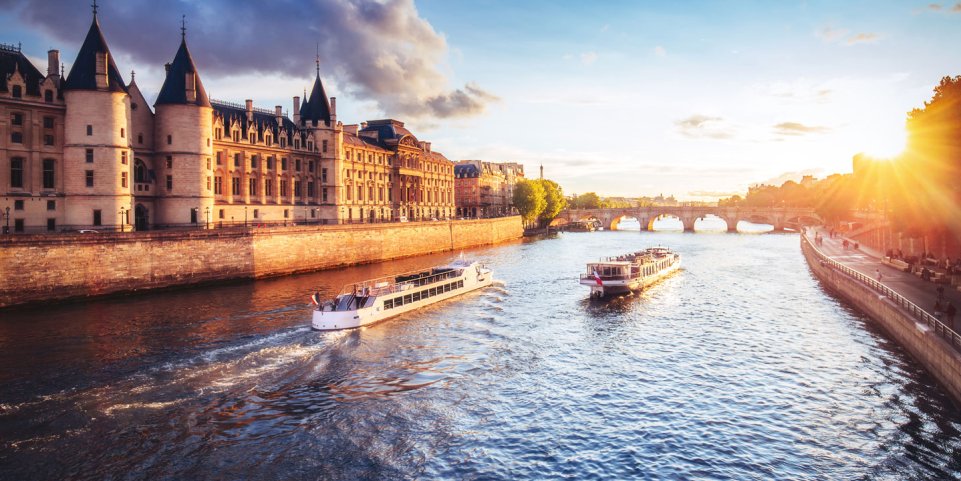
The Seine: the bateaux-mouches and the riverbanks
The Seine, the river that flows through the centre of Paris, is punctuated by two charming natural islands, Ile de la Cité and Ile Saint-Louis, and separates the northern and southern banks of the city. The two riverbanks are UNESCO-listed world heritage sites. They can be visited by foot or by bicycle, or by taking a famous Parisian bateau-mouche. From the banks of the Seine, you can admire many famous monuments: the Eiffel Tower, the Musée d’Orsay, the National Assembly, the Louvre, the City Hall, the Conciergerie, Notre-Dame Cathedral and more.
Don’t hesitate to stop at one of the outdoor bookseller stands, whose owners often enjoy chatting with visitors.
The bridges of Paris
There are 37 bridges linking the northern (right) and southern (left) banks of Paris, including 5 pedestrian-only bridges. The bridges of Paris are monuments well worth visiting.
- The Pont Alexandre III, built for the 1900 World’s Fair in the baroque style with 32 bronze candelabras, connects the Grand Palais to the esplanade of Les Invalides. At 150 m long and 40 m wide, this is the largest bridge in Paris.
- The Pont Mirabeau, commemorated in the eponymous poem by Apollinaire, is decorated by four sculptures representing the City of Paris, Commerce, Navigation and Abundance.
- The Pont d’Alma is well known for its famous Zouave, who is leaning against a column. He indicates the water level of the Seine. On the right bank near the end of the bridge, you can find the Flame of Liberty, a replica of the flame on the Statue of Liberty, which has also become an unofficial memorial for Princess Diana.
- The Pont de la Concorde was built in 1790 using stones from the recently dismantled Bastille. 12 statues represent 12 important figures.
- The Passerelle Simone-de-Beauvoir, the most recent bridge, was built in 2006 and is reserved for pedestrians
- ....
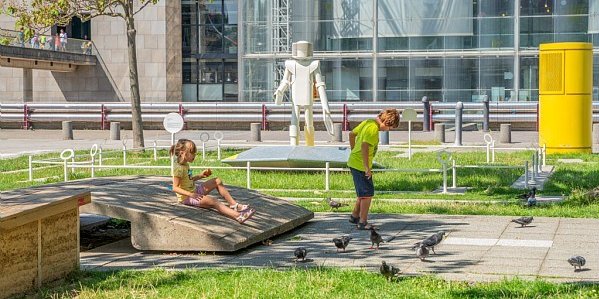
Parc de la Villette
The Parc de la Villette, inaugurated in 1987, in the 19th arrondissement, is Paris’ largest park. In addition to its large open lawns, bicycle paths along the canal, carousels and playgrounds, you will also find:
- The Grande Halle (which replaced Napoleon III’s slaughterhouses, destroyed in 1974)
- The Museum of Music
- The Paris Philharmonic
- The City of Science and Industry and La Géode (an omnimax theatre)
- Le Cabaret Sauvage, a performance space
- 26 follies: small red buildings of different shapes, built using cubes. Each serves its own purpose: as a concert hall, a theatre, a lookout point, etc.
- Various gardens created by landscape architects
- An open-air cinema on summer evenings
- ...
The Parc de la Villette: a breath of fresh air
Paris’ largest park is home to 3000 trees of 70 different varieties, an orchard with 23 fruit trees, 3000 m2 of garden with an eco-friendly green space certification, 4 beehives (40,000 to 50,000 bees in each hive), and 4 black sheep from the Velay, used for “eco-grazing”. There are also a number of different themed gardens that you can visit throughout your visit: educational gardens, the Bamboo Garden, the Garden of Children’s Frights, the Balance Garden, the Trellis Garden, the Balancing Garden, the Island Garden, the Garden of Mirrors, the Garden of Dunes and Wind, the High-Flying Garden, the Dragon Garden, the Shadow Garden and the Garden of Drawings.
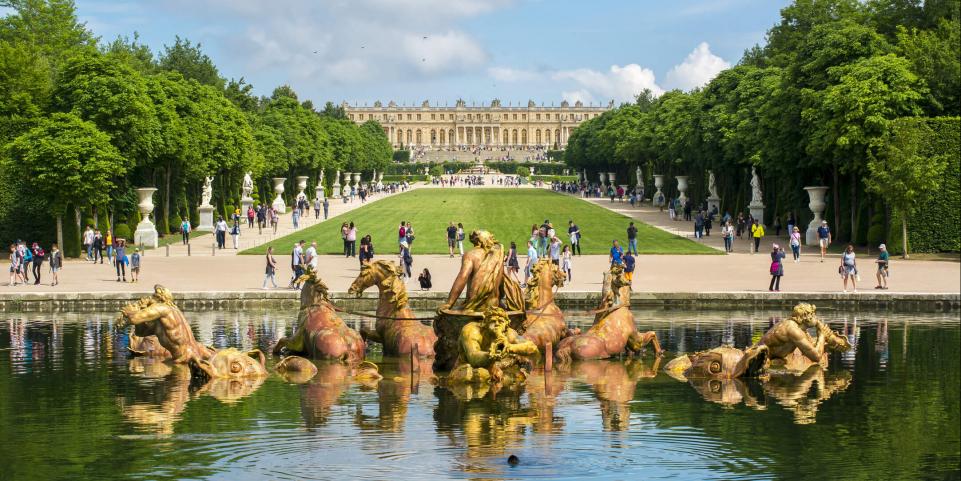
The Palace of Versailles
The iconic Palace of Versailles, built by the Sun King himself, Louis XIV, and inhabited by Louis XV, Louis XVI and Napoleon, is a major historic site and without a doubt one of the most beautiful palaces in the world.
The palace is immense: 63,154 m2 with 2300 rooms, including 1000 rooms open to the public. The gardens are also extraordinary, covering 815 hectares and including the Petit and Grand Trianon, the Queen’s Hamlet, the Large and Small Canal, and more.
Inside a royal palace
On the ground floor, you will find the rooms that were reserved for the royal family in the 18th century, including the Mistresses’ apartments and the apartments of the Dauphin and Dauphine.
On the second floor, the King’s and Queen’s Apartments, as well as the famous Hall of Mirrors, with its 357 mirrors. It is 73 m long and 10.5 m wide, with 17 arches facing 17 windows.
On the third floor: The king’s private apartments and the queen’s interior cabinets. Up above these were the apartment of Madame du Barry and the Marquis de Maurepas, as well as the Marquise de Pompadour.
- The Palace of Versailles
- Place d'Armes
- 78000
- Versailles
- France
- 01 30 83 78 00
- Opening hours: The Palace is open every day except Monday from 9 am to 5:30 pm, the Trianon and the Coach Gallery are only open on afternoons from Tuesday through Sunday. The park and the gardens are open every day from 8 am to 6 pm.
- Price info: The park and gardens are free (except during the Grandes Eaux shows, when you must pay for access to the gardens.) Pushchairs and metallic baby carriers must be left at a secure drop-off point free of charge. Access to the Palace and the Trianon are free for children under the age of 18 (and all EU citizens under the age of 26.)
- How do you get there? The RER C stops at the Versailles Château Rive Gauche station, a 10-minute walk from the Palace. SNCF trains from the Paris Montparnasse train station stop at the Versailles Chantiers station, an 18-minute walk from the Palace. SNCF trains from the Paris Saint Lazare train station stop at the Versailles Rive Droite station, a 17-minute walk from the palace.

Disneyland® Paris
Located just 30 minutes from Paris and accessible by public transport, Disneyland® Paris is Europe’s most popular amusement park. It is made up of two theme parks: the Disneyland park, with its usual Magic Kingdom, and the Walt Disney Studios park, which contains exhibits about the world of cinema and animation.
In the Disneyland park, once you pass through Main Street USA, you will find everything you could expect to find in an amusement park, with plenty of attractions and activities for all. The Sleeping Beauty castle, the Big Thunder Mountain roller coaster, a haunted house, a Wild West stand, the boat from Pirates of the Caribbean, the crazy train from Indiana Jones, the Swiss Family Robinson’s tree house, Aladdin’s cave, the spinning teacups from Alice in Wonderland... There is something for everyone.
The Walt Disney Studios park is focused on the cinema industry, offering a train ride that transports you through the world of special effects, giant screens, 3D technology, simulations and attractions.
Nearby
- Disney Village: an open-air shopping and recreation centre
- 7 Disney hotels
- A golf course
- Val d’Europe, the urban space, where you can also find the Dhuys sculpture garden and the shopping centre that is home to the Sea Life Paris Val d’Europe aquarium.
- Disneyland Paris
- BP 100 Marne-la-Vallée
- 77777
- Chessy
- France
- 08 25 30 05 00
- Opening hours: Open every day from 10 am to 10 pm
- How do you get there? RER A or train. 2-minute walk from the Marne-la-Vallée/Chessy train station