
The world famous Château de Versailles is one of the most visited tourist attractions in France. The Hall of Mirrors, the Royal Apartments, the French gardens, the Fountain shows - everywhere you look is a feast for the eyes.
Book a train ticket
Book a train ticket
Take a train to Versailles and enjoy a trip to the castle of the Sun King, one of the most visited sites in France. History, art, architecture, gardens — you’re going to love it! In order to see everything the palace has to offer, you’ll need to go for more than one day!
Discover the Château de Versailles:
- The palace and its history
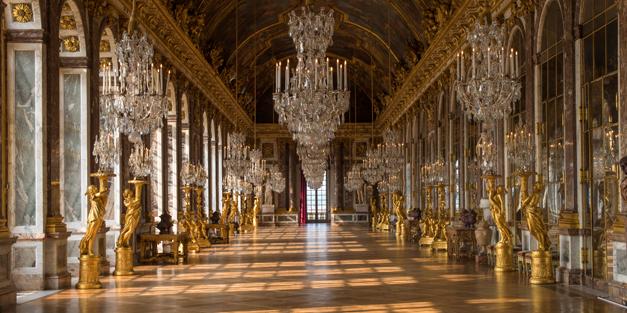
- What to see in the palace: the famous Hall of Mirrors, the Apartments, the Royal Chapel, the Opera and more
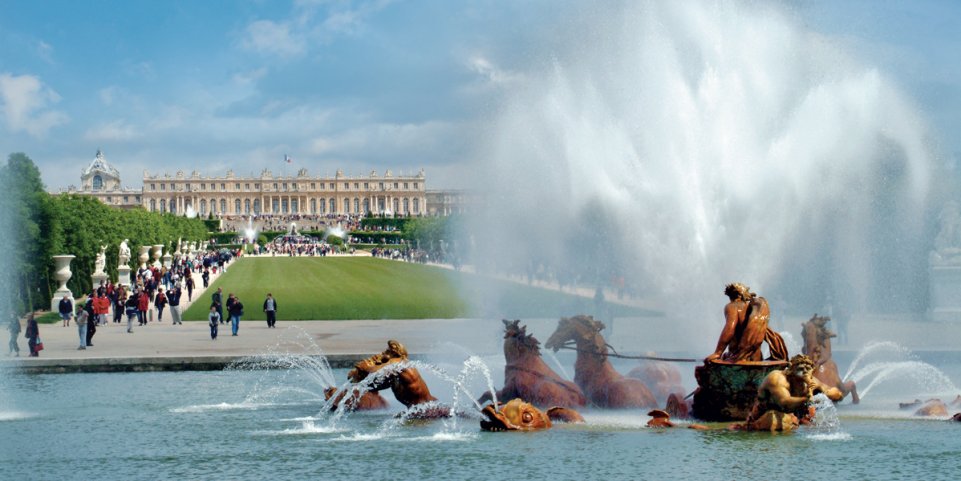
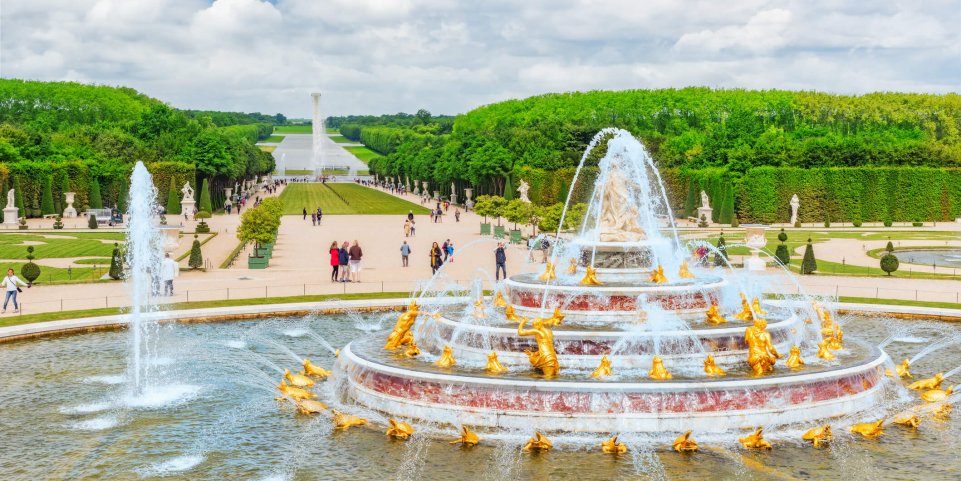
- The grounds: parks, gardens and fountains, as well as Musical Fountain Shows
- The Estate of Trianon: The Grand and Petit Trianon, the Queen’s Hamlet and the Queen’s Theatre
- Discover more
Some information on the castle and its history:
Which king built Versailles?
Created by Louis XIV, also known as the Sun King, this magnificent palace has experienced the splendour of the court. Listed as a World Heritage Site, the former hunting pavilion is today internationally recognised.
When was the Palace of Versailles built?
In 1623, lover of hunting, King Louis XIII began constructing a small hunting lodge, conveniently located on the grounds of Versailles. It wasn’t until 1661 that the king made it his main residence, known throughout the world.
Musée de l’histoire de France (France history museum)
The Château de Versailles is closely linked to the Sun King, but was continued to be used after the death of the monarch. Following the French Revolution, Louis-Philippe, King of the French, decided to dedicate a whole part of the monument to a museum dedicated to “all the glories of France”, in order to reconcile the different successive regimes. The museum can only be visited with a guide. It includes the chance to see the famous Galerie des Batailles (Gallery of Battles)!
Things to see in the palace
The Hall of Mirrors, an emblem of Versailles
The most emblematic area in this famous palace is the Hall of Mirrors. Its 357 mirrors are a true artistic feat of this era. They face the 17 large windows overlooking the gardens, creating a luminous space which is enhanced with gilding. While strolling around the gallery, imagine the courtiers on both sides, discussing and observing the splendours of the palace.
The Royal Chapel
Every day, the king, his family and the court attended mass in the Royal Chapel. The monarch usually stood in the royal tribune, except during important religious celebrations such as the baptisms and weddings of the royal children. Our eyes cannot help but marvel at the magnificent architecture and decor used to design the large glass windows and buttresses. While you look around in awe, take the time to appreciate the vaulted ceiling dedicated to the Holy Trinity — it’s divine!

The Royal Opera
Originally an idea of Louis XIV but constructed under the reign of Louis XV, the Royal Opera of the Château de Versailles continues to host a range of superb performances. Intended as a theatre which could be easily adapted for use as a ballroom or banquet hall, the room was designed with an ingenious mobile floor system moved by hoists, which allowed the space to be transformed. This transformation took two days of work to complete, but was both cheaper and less tedious than constructing a temporary room for every event. The Royal Opera is a must-see during your visit, with a superb range of events on offer every year.
The Apartments
The Château de Versailles is huge — it had to accommodate everyone! With 2,300 rooms spread over an area of more than 63,000 m2, you will need time to see it all.
Etiquette being of great importance in the court, the royal couple each had their Grand apartment. These places of pageantry were filled with gilding and works of art to impress visitors. They, of course, also had their own private apartments, as did all the heirs, favourites, etc. All this can be visited, with or without a guide, depending on the apartments.
When there, take a good look at the walls — you’ll find small concealed doors that were hidden as much as possible. It was thanks to one of them that Marie-Antoinette managed to escape in 1789.

The grounds: parks, gardens and fountains, as well as Musical Fountain Shows
Who designed the gardens of the Château de Versailles?
Under the reign of Louis XIV, André Le Notre was put in charge of creating and landscaping the gardens of Versailles, surrounded by Colbert, the Superintendent of Buildings, Le Brun, the painter and Hardouin-Mansart, the architect.
The Park
The centrepiece of the Park is its famous Grand Canal. It provides a breathtaking perspective through a long bright breakthrough between the trees and groves. At the time of Louis XIV, you would have seen rowing boats and other vessels sailing here on sunny days and even gondolas straight from Venice! And in winter, the canal transformed into a giant open-air ice rink.
The park is open every day except in cases of extreme weather conditions. Entrance is free. It is the perfect place for a refreshing walk along the canal or in the shade of the trees.

The Gardens
The French Gardens need no introduction, appreciated for their harmonious and symmetric design, of which the Gardens of Versailles are a prime example.
You could easily spend half a day wandering between the geometric parterres, observing the elegant statues and discovering the groves. These are little hidden corners of paradise, where you feel cut off from the world. The Bosquet des Bains d’Appollon is my favourite. The statues are elegantly placed in an artificial cave-like setting. And yes, if you didn’t know otherwise, you would think the rock is real.
On sunny days, head to the Musical Gardens for a relaxing stroll enhanced by music. (Certain Tuesdays and Fridays, from April to October)
Fountains and Musical Fountain Shows
Another unique feature of these gardens is the number and complexity of its fountains. During their construction, the fountains represented a considerable technical challenge to please the king. The hydraulic works still have an effect on visitors, particularly during the Musical Fountain Shows and the Night Fountain Shows!
The Musical Fountain Shows can be experienced during the day on certain Tuesdays and Fridays and every weekend from April to October. The Night Fountain Shows take place on Saturdays from mid-June to mid-September.

The Estate of Trianon
Not far from the castle, the Sun King built an estate on an ancient village called Trianon. Louis XV found this to be a peaceful place, much to the agreement of its distinguished inhabitant: Marie-Antoinette.
The Grand Trianon
Without a doubt the most refined set of buildings on the grounds of Versailles, the Grand Trianon and its pink marble exterior is worth the detour. A long covered corridor known as the Peristyle opens onto the gardens on one side and the courtyard on the other — it’s simply charming! It’s here that Louis XIV would most often meet his mistress Madame de Montespan.
A popular dwelling place at the time, this building consists of bedrooms, living rooms and a chapel. Part of the rooms evolved with their different owners and inhabitants, all while maintaining the spirit of the original. The family and the king’s favourites stayed there and Napoléon the 1st also stayed there for some time after his divorce with Josephine. In 1963, General de Gaulle decided to restore the premises in order to host important dignitaries.
The Petit Trianon
Smaller and more modest than the Grand Trianon, the Petit Trianon remained the favourite of Queen Marie-Antoinette who preferred to stay here in order to escape the etiquette of the court. Mainly inhabited by women, it was the Empress Eugénie, wife of Napoléon III, who decided to transform the Petit Trianon into a museum dedicated to Marie-Antoinette, the one we can still visit today.
During your visit, take time for a break in the shade of the trees at the Temple de l’Amour and enjoy a superb view of the Petit Trianon.

The Queen’s Hamlet
Following the creation of the English gardens of Trianon, Marie-Antoinette decided to build a hamlet around an artificial lake, which was designed in three separate parts: a farm with a stable, a pigsty and a sheep pen. Further on, buildings were constructed for farming. The Queen then built a number of houses for herself and her loved ones, with carefully decorated and often richly furnished interiors.
A visit to the Hamlet plunges you into another era, and it is easy to see why Marie-Antoinette loved to take her children here for educational purposes during their walks.
Please note: following a restoration in 2018, the Queen’s Hamlet is now open for visits!
The Queen’s Theatre
Here again, Marie-Antoinette has left her mark. Tired of having to set up and dismantle temporary installations for theatre shows (which she was passionate about), she had a theatre built in Trianon. The machinery has been restored and can still function today, which makes the Trianon Theatre the only French theatre of the XVIIIth century still intact and in working order. Impressive!
Please note, it can only be visited during guided tours. Without a guide, you will only be able to see a very small part of this historical monument.

Discover more
To finish off your visit to Versailles, take a stroll around the Gallery of Coaches. Within this large stable, which itself merits a visit, you will discover a collection of impressive carriages.
The small carriages for Marie-Antoinette’s children and the sedan chairs sit elegantly between the majestic coaches and the sleds. Here, the carriages that you see have never been used for travelling. They are instead ceremonial coaches which have been designed to impress.
- Château de Versailles
- Place d'Armes
- 78000
- Versailles
- France
- Price info: Peak season, from the 1st of April to the 31st of October: Palace: every day (except Mondays and the 1st of May) from 9:00 am - 6:30 pm/Park: every day (except in extreme weather) from 7:00 am - 8:30 pm/Gardens: every day (except in extreme weather and on certain specific dates) from 8:00 am - 8:30 pm/Estate of Trianon: every day (except Mondays and the 1st of May) from 12:00 pm - 6:30 pm/The Gallery of Coaches (free entry): every day (except Mondays and the 1st of May) from 12:30 pm - 6:30 pm