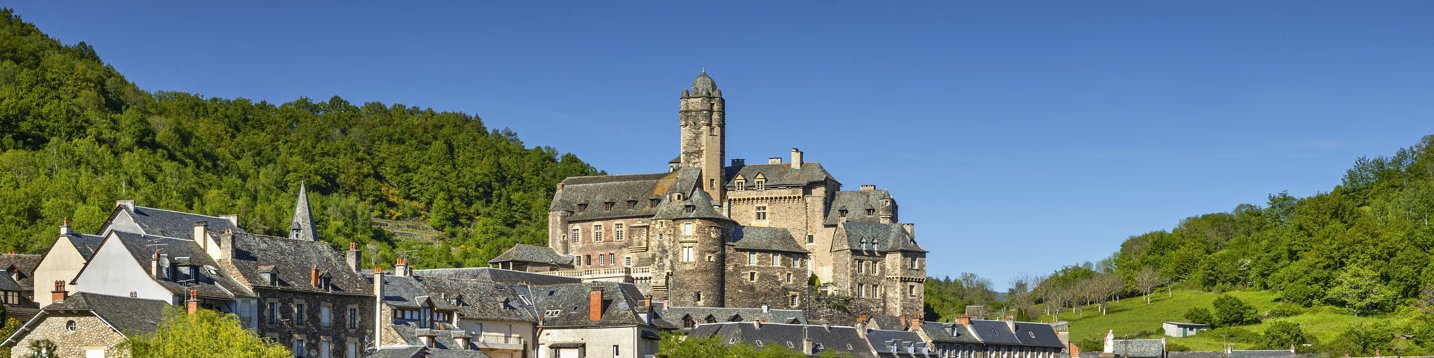
Among the many “Most Beautiful Villages in France”, discover 10 at the water's edge where historic charm and water activities come together to offer a perfect getaway.
Book a train ticket
Book a train ticket
Are you looking for a charming village where you can enjoy a historic setting as well as being close to the sea or a river? Here are 10 of the most beautiful villages in France where you can combine walks among historic sites and water activities.
The label of the “Most Beautiful Villages in France" is awarded by an association that works to protect and promote French heritage. 159 villages have been selected for their charm, history and dynamic lifestyle.
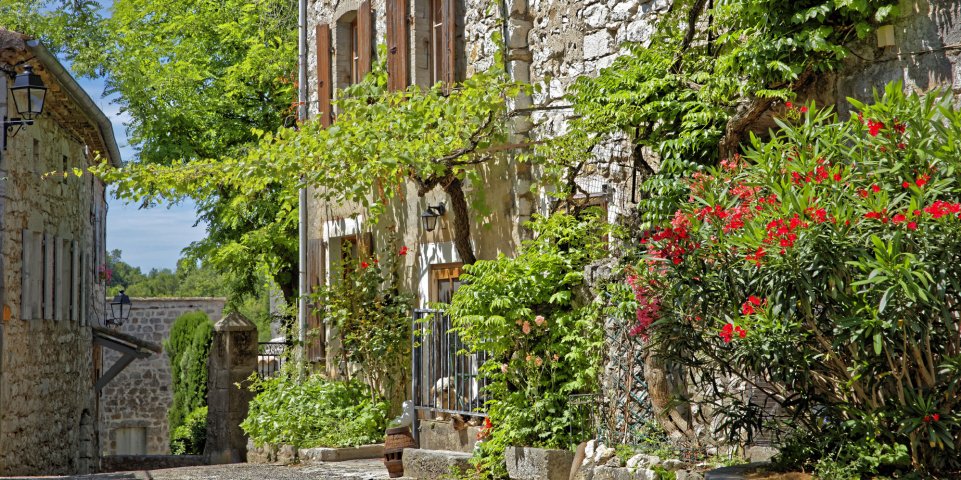
The top 10 most beautiful villages on the water
- Saint-Suliac in Brittany
- Barfleur in Manche in Normandy
- Veules-les-Roses in Normandy
- La Flotte on L’Ile de Ré
- Ars-en-Ré on L’Ile de Ré
- Mornac-sur-Seudre on the Côte de Beauté in Nouvelle-Aquitaine
- Talmont-sur-Gironde in Nouvelle-Aquitaine
- Estaing in the Lot Valley
- La Roque-Gageac in the Dordogne
- Balazuc on the Ardèche River
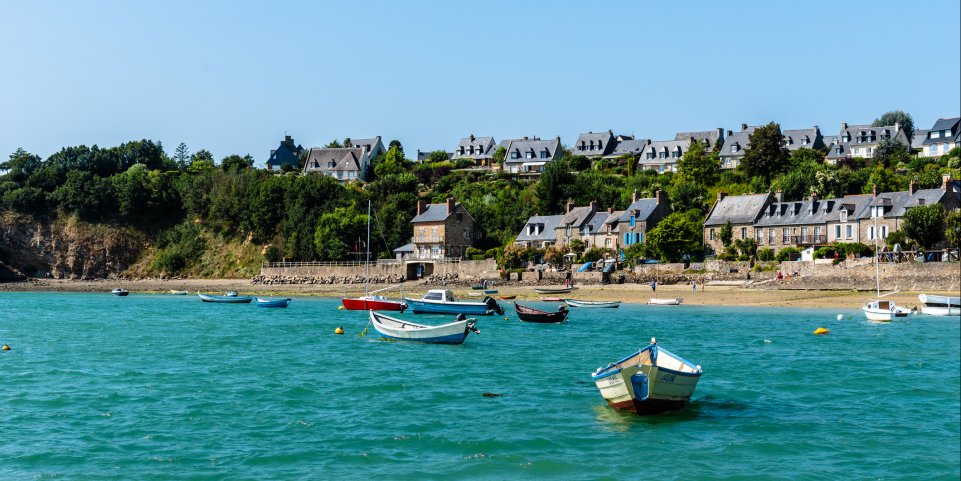
Saint-Suliac in Brittany
Saint-Suliac is located in the Rance estuary, about ten kilometres from Saint-Malo on the Emerald Coast.
The village
Around its church and harbour, the small winding streets lined with old granite houses continue onto the peninsula, with its 12 km of shoreline. You can see classified historical monuments such as the menhir known as the "Dent de Gargantua"; the 13th-14th century Eglise de Saint-Suliac, which has a fortified tower and is surrounded by a parish enclosure; the remains of a 10th-century Viking camp, known as the "Huitrière de Garrot” and the tidal mill of Beauchet.
Seaside activities
Follow the coastal hiking trails to discover classified natural sites such as the tide mill of Beauchet and the old salt flats of the Guettes (founded in 1736), and climb the 730-metre-high Mount Garrot for a view of the estuary, Saint-Malo and Mont-Saint-Michel.
At the Centre Nautique de Rance, you can rent a sailboat, windsurf board, catamaran and more.
You may even see an old sailboat, la Chippe Maria de Saint-Suliac, a traditional fishing boat that participates in nautical festivals.
>> Discover the peninsulas of Brittany!
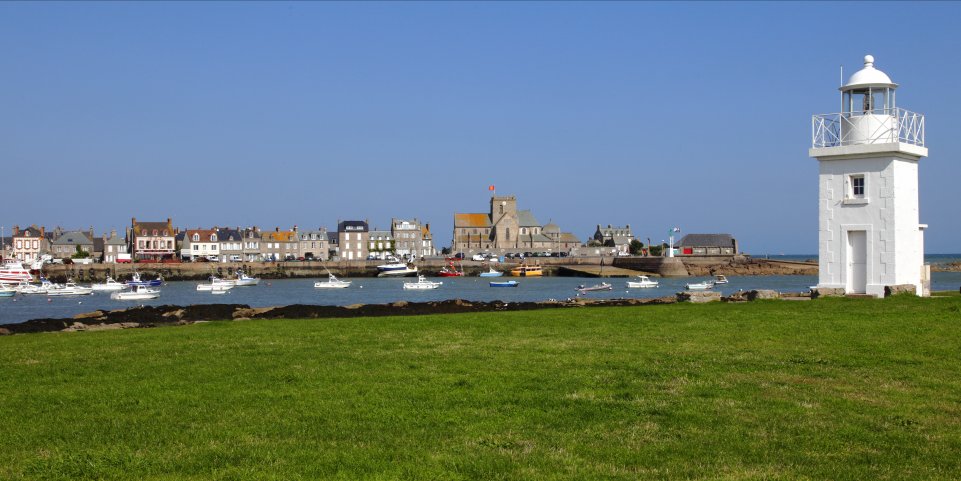
Barfleur in Manche in Normandy
Barfleur is a small port on the English Channel, northeast of Cotentin, about 30 kilometres east of Cherbourg.
The village
The originality of this charming fishing village is found on the shale roofs and skylights of its old grey granite houses: ceramic ridge spikes adorned with birds, and "taffètes" (ridge tiles) decorated with lace or buttons. At the end of the harbour pier, a bronze medallion embedded in a rock commemorates William the Conqueror and the Battle of Hastings for the Norman conquest of England. After visiting the 15th century dovecote on the dyke, the last vestige of a long-gone manor house, enter the 17th and 19th century Eglise Saint-Nicolas to appreciate the stained glass windows, then walk around the back to see the sailors’ cemetery.
La Cour Sainte Catherine is the oldest medieval house in the village, and features a carriage entrance, a door with a lintel decorated with a brace, a small mullioned window and an exterior staircase. On Rue Saint-Nicolas, a plaque marks the house where Paul Signac lived. As you walk through the narrow streets, you can also see the old rectory (34 Quai Henri Chardon), the Alexandre House (3 Rue St Thomas Beckett) and the Couvent des Augustins (64 Rue St Thomas Beckett).
Seaside activities
At the auction house, you can taste mussels fresh from the sea. “Blonde de Barfleur” mussels are a wild, fleshy variety with a shimmery golden shell. The “Loi Colbert” made it legal for fisherman to sell their wares directly at the wharf. Even today, fishermen can still set up a stall on the seaside, less than three metres from their boat, to sell the day's fishing haul. Don't hesitate to browse the stalls for some fresh, high-quality seafood!
Follow the coastline to the Gatteville lighthouse – with its 365 steps and a height of 75 m, it is the second largest lighthouse in France.
Here, you will find everything from surfing to windsurfing, kitesurfing, stand up paddleboarding, land sailing, rowing, children’s dinghies, full-size dinghies, catamarans, yachting, sea kayaking, swimming and diving — the choice is yours!
Veules-les-Roses in Normandy
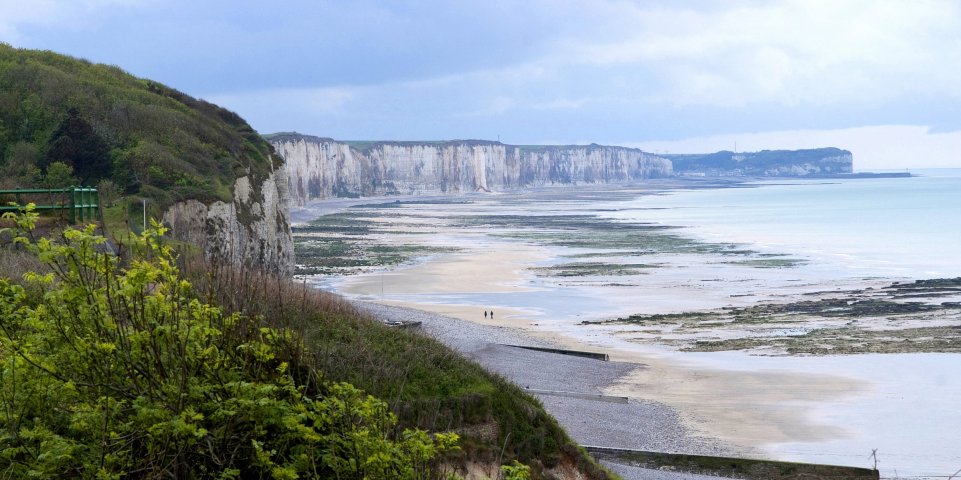
Veules-les-Roses is a seaside resort town on the Alabaster Coast, about 30 kilometres west of Dieppe. This town is also home to France’s shortest river that leads to the sea, at just 1149 metres long: the Veules. It is also said to be one of the oldest villages in the Pays de Caux.
The village
Many artists have succumbed to the charm of this village: Anaïs Aubert (1798-1871) of the Comédie-Française was one of the first. Writer Paul Meurice (1818-1905) was visited by his friend Victor Hugo here, as well as Alexandre Dumas Jr. (1824-1995). The narrow streets are lined with beautiful Norman homes with thatched roofs and authentic water mills overlooking the Veules.
As you make your way to the beach, you’ll pass by wooded areas, secret gardens filled with roses, and watercress gardens, pools of running water where watercress grows.
Seaside activities
Fishing is still common on the Veules, and you, too, can catch shrimp and have fun finding periwinkles among the rocks. Take a walk along the large beached protected by high cliffs for a breath of fresh sea air.
The wide sandy beach offers a vast space for recreational activities at low tide. Visit the Point Plage sailing area for all kinds of nautical activities, from kayaking to catamarans, windsurfing and more.
>> From Dieppe to Fécamp: the Alabaster Coast
La Flotte on L’Ile de Ré
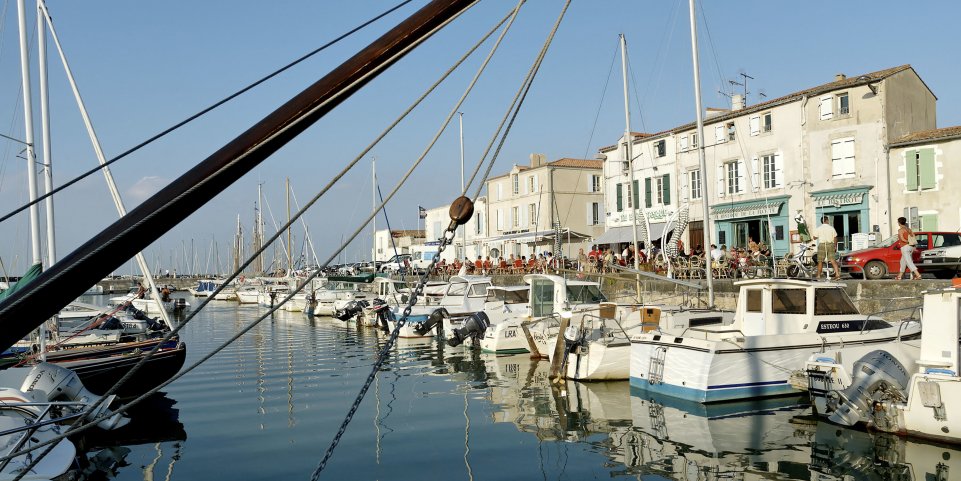
La Flotte, on the northern part of the island, is also listed as a Village de Pierre et d’Eau (Village of Stone and Water). People visit the village for its port, its market and to stroll through its charming narrow streets decorated with flowers.
The village
The medieval market is open every morning. Stands selling fish, vegetables, PDO potatoes and flowers are set up between the stone walls. It is a pleasure to stroll through this, L’Ile de Ré’s most unusual market, in its medieval setting: an old, half-covered, cobblestone market hall.
In a meadow at the water's edge, you will find the ruins of the Cistercian Abbey of Les Châteliers, the remains of a 12th-century monastery (classified as a historical monument). After the death of Charles VII’s wife on this site in 1463, it was named a sacred Royal Abbey, and monks cultivated the salt flats and grapevines here until the 16th century.
Seaside activities
Facing the port, your first stop will undoubtedly be La Martinière, THE ice cream shop of L’Ile de Ré. Along with the usual chocolate and vanilla, they also offer many more unusual flavours: Carrot, Fennel, Strawberry Tagada, Mojito, Smurf, Viagra and Rose are among the sixty flavours of sorbets, and Gazelle Antler, Oyster Caviar, Irish Coffee, Lavender and Potato are among the sixty flavours of ice cream.
The tree-covered sandy beach of the Arnérault on one side of the harbour faces the pebble beach of La Clavette, which is suitable for water sports, on the other side.
Ars-en-Ré on L’Ile de Ré
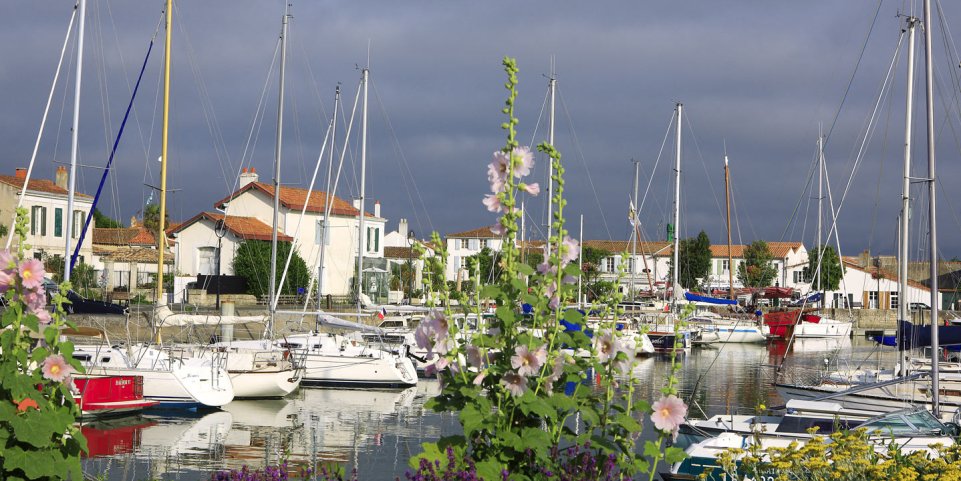
Ars-en-Ré is a Village de Pierre et d’Eau and Terre Saine au Calme (“Calm and Healthy Place”), surrounded by nature. To reach Ars, you must cross the Martray, a strip of land no wider than ten metres across, that separates the two ends of the island.
The village
From the port, the narrow streets lined with small white houses with green shutters covered with rosebushes lead you to the 40-metre-high black and white bell tower of the Eglise Saint-Etienne, built in a Romanesque and Gothic style. You will also pass by the traditional house of the 16th century seneschal, along with old windmills that have been converted into dwellings.
To enjoy the water
A sailing school offers introductory classes for young water sports enthusiasts. At low tide, go beach fishing at Fiers d’Ars. The bicycle paths cross through the salt marshes to the beaches of La Conche and the Phare des Baleines. The 800-hectare bay is the ideal setting for an invigorating coastal walk in the sea air.
The Espace Forme Marin at the Côté Thalasso hotel, made up of “small Ré-style houses”, is a perfect place to relax and enjoy the benefits of water. It offers ultra-relaxing water treatments, a 30-degree seawater pool, a thalatonic circuit and a "fish pedicure".
Mornac-sur-Seudre on the Côte de Beauté in Nouvelle-Aquitaine
Mornac-sur-Seudre is located in Charente-Maritime, on the left bank of the Seudre, about ten kilometres north of Royan. Mornac-sur-Seudre is also labelled as a Ville et Métiers d’Art (City of Artisans) and Village de Pierres et d’Eau.
The village
Many artists and artisans have set up shop in the narrow medieval streets around the village’s fishing port. The walls of the traditional white houses are covered with roses. The covered market, the old Romanesque church of Saint-Pierre and the remains of the castle of the barons of Mornac set the tone for a historic centre. The 10th-century Romanesque Eglise Saint-Pierre possesses rare 12th-century paintings.
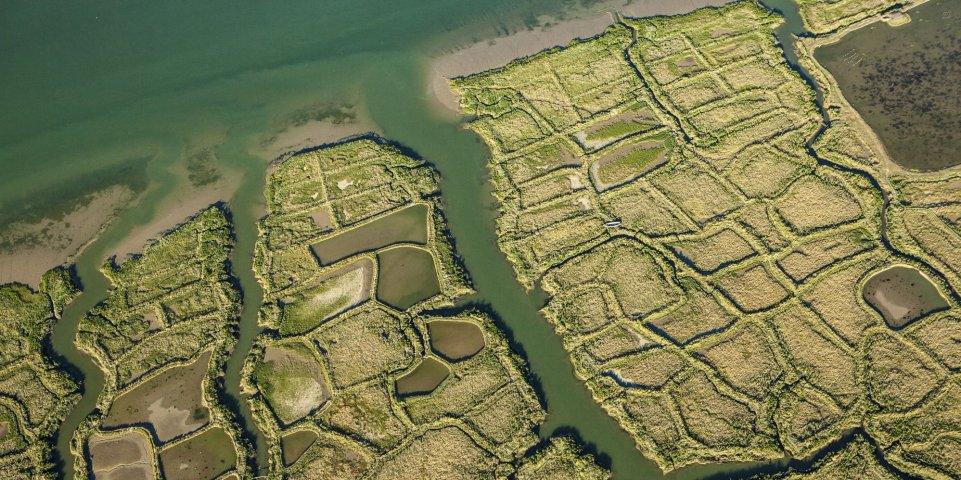
The marshes of the nearby Seudre, composed of mudflats with grey-blue reflections and reed hedges, offer an unusual sight. Mornac is part of the Marennes-Oléron oyster basin, and is home to many oyster farms.
Water activities
Cycle along 30 km of marked trails between Mornac-sur-Seudre and La Tremblade, to the old salt marshes. You will cross the vineyards of the Hamlet of Coulonges, and you can even take the Train des Mouettes on the way back.
Rent a kayak or a stand-up paddleboard, or take a river cruise to discover the Seudre and observe the egrets.
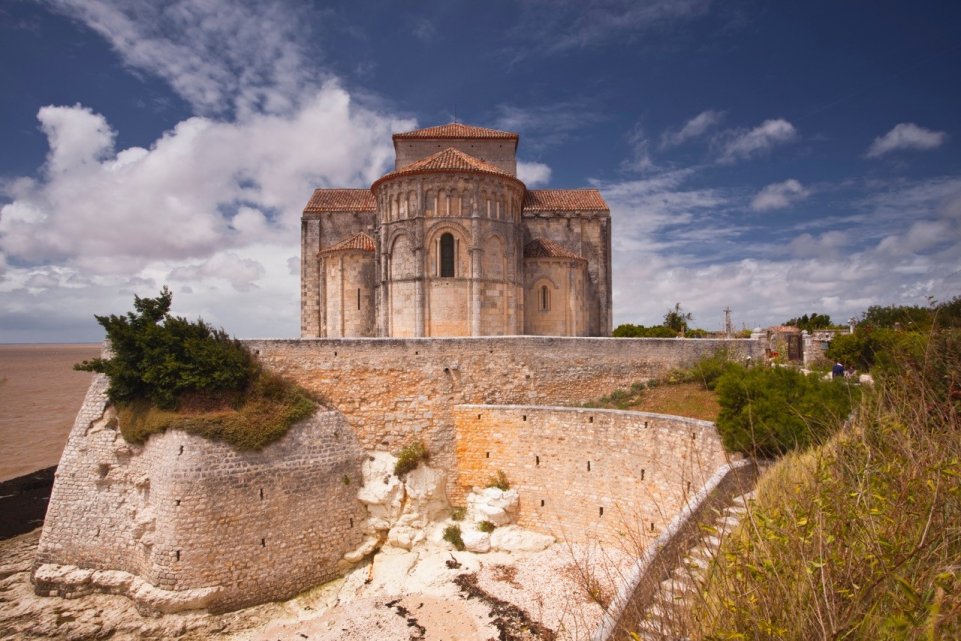
Talmont-sur-Gironde in Nouvelle-Aquitaine
Talmont-sur-Gironde overlooks the Gironde estuary, about 20 kilometres south of Royan. The village is listed as a Petite Cité de Caractère (“Small Village with Character”) and a Village de Pierres et d'Eau.
The village
All that remains of the bastide built by the King of England in 1284 is a small portion of the ramparts, and the white tower. The gridded narrow streets are lined with old, low-lying whitewashed houses with blue shutters and pink tile roofs. Roses climb the walls. The rounded 12th-century Eglise Sainte-Radegonde, perched on the edge of the cliff, is on all the postcards. Its sailors’ cemetery is dotted with wildflowers.
The Talmont Museum, located in a historic house, presents local history and a fishing museum. In the courtyard is a yole, the type of boat traditionally used by the fishermen of the Gironde estuary.
Water activities
Follow the well marked trails across the vineyards and marshes. From the cliffs, you have a panoramic view of the estuary and the traditional carrelets, fisherman's huts. If you take a boat, you can’t miss the photo opportunity presented by the Eglise Saint-Radegonde surrounded by ramparts. Look closely at the nearby Meschers cliffs, and you’ll see troglodytic caves.
Talmont is along the GR 360 trail, and is a perfect place to immerse yourself in nature. It is a special protection zone of the Marais de la rive nord de l’estuaire de la Gironde, a migratory and breeding stop for many birds and an Area for the protection of architectural, urban and landscape heritage. Several natural spaces in the area are classified Natura 2000 sites. The Falaises de La Roche are a classified natural area of ecological, wildlife and floral interest.
>> The best hiking trails in France
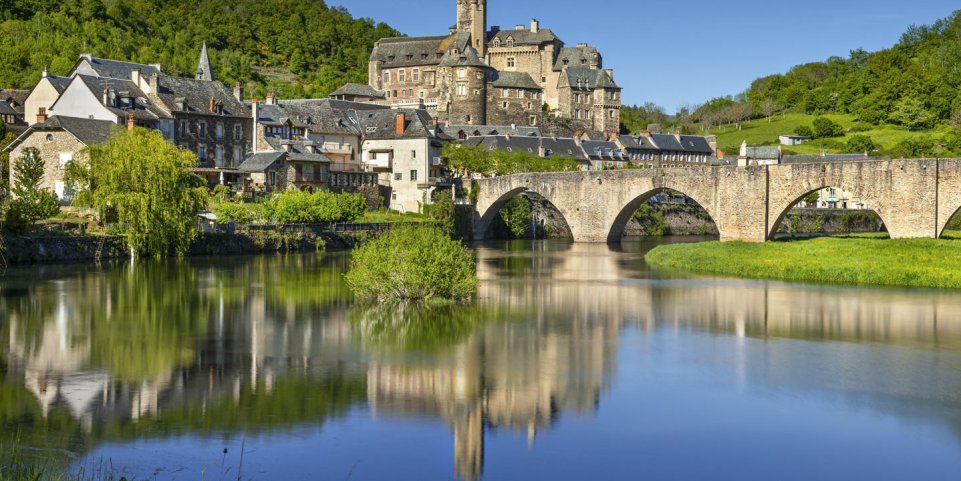
Estaing in the Lot Valley
Estaing, in the Aveyron, is about 40 kilometres north of Rodez, bordered by the Lot and its tributary the Coussane, along one of the Santiago de Compostela pilgrimage routes.
The village
Estaing Castle, built in the 15th century, overlooks the village (historical monuments). It was bought in 2005 by Valéry Giscard d'Estaing and his family. Walk down the picturesque narrow streets to see the 15th-century shale bridge that crosses the Lot. The Manoir de la Fabrègues, a beautiful 16th century stone house that has been transformed into a hotel, is located in La Fabrègues, on the banks of the Lot. The 15th-century Eglise Saint-Fleuret d'Estaing has a 15th-century Christ and a 17th-century pietà. Note the 15th-century carved stone cross on the terrace. The old school, which has been turned into the town hall, is a beautiful 16th-century Renaissance-style complex located in the centre of the village.
On the water’s edge
You can rent canoes, pedalos and stand-up paddle boards to enjoy the beaches and whitewater of the Lot. The open-air municipal swimming pool is located by the water, and you can find information about all sorts of water activities there.
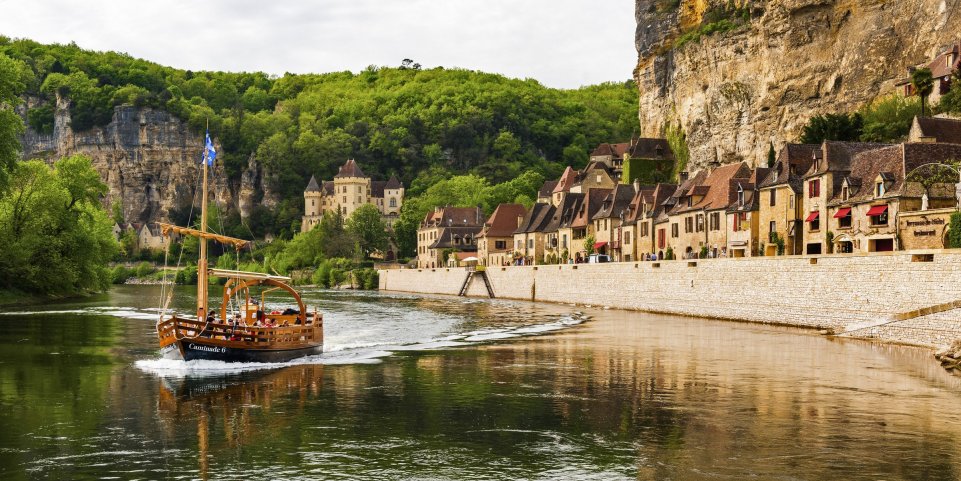
La Roque-Gageac in the Dordogne
La Roque-Gageac, at the base of a limestone cliff along the Dordogne, is located 8 kilometres southwest of Sarlat-la-Canéda, in the heart of the Périgord Noir.
The village
The village of La Roque-Gageac is full of old houses with brown tiles on their traditional roofs. The view of the winding valley carved by the Dordogne is magnificent. As you walk, you can observe the 12th century troglodytic fort, the 14th century church with a bell tower and an exotic garden (palm trees, banana trees, fig trees, cacti and even bamboo) and the Manoir de Tarde, the former residence of the bishops of Sarlat.
The local farmers' market, held on Friday mornings between May and September, offers many tantalising products.
Water activities
Take a gabarre, a traditional boat, to navigate the Dordogne as they did in the Middle Ages. You can also experience this beautiful view of the village by renting a canoe. In summer, swimming in the Dordogne is delightful.
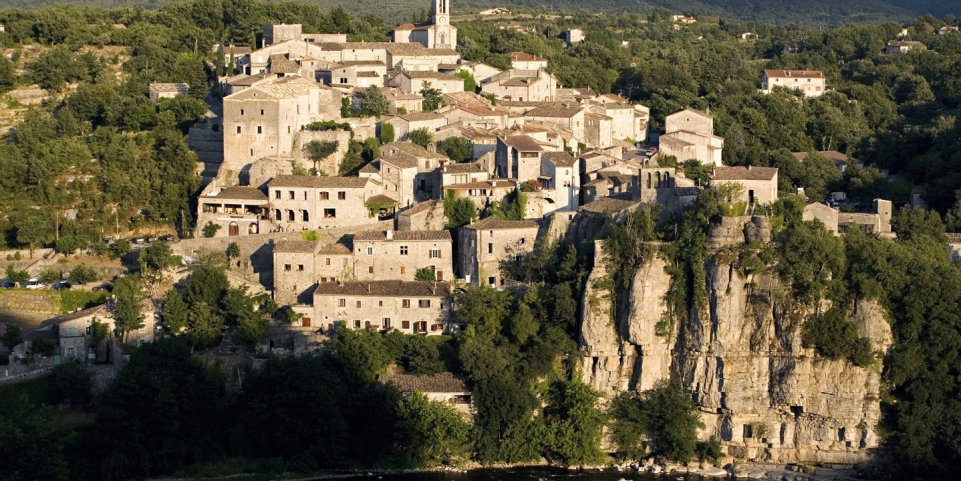
Balazuc on the Ardèche River
Balazuc is in the Ardèche, in Auvergne-Rhône-Alpes, about 40 kilometres west of Montélimar. It is listed as a Village de Caractère. This medieval village was once a Gallic stronghold!
The village
Clinging to its rock with the Ardèche River at its feet, Balazuc is a maze of narrow, winding streets, staircases, cobblestone ramps and arches, surrounded by ramparts, with an 11th century castle and keep.
You can also visit the Museum de l’Ardèche, where more than 800 original fossils are on display.
Nature activities
Here, you are in the heart of the Ardèche Valley, which is listed as a natural area of ecological, wildlife and floral interest. The Middle Valley of the Ardèche and its tributaries are also classified Natura 2000 sites. Nature is everywhere, here, and can be discovered in many ways: by hiking along the water, canoeing, climbing the cliffs or cycling along the 28-kilometre path between Vogue and Grospierres via Balazuc.