The tickets for your summer holidays are now available. You will be able to book trips scheduled between July 4 and December 12, 2026, in France and Europe. Discover our tips and ideas for your summer travels and getaways!
Book a train ticket
Book a train ticket
- The opening of summer sales in practical terms
- Dates you need to know
- Top 5 reasons to travel by train this summer
- Take the train to relax with nature
- Take the train to the beach
- Take the train to get a breath of fresh air in the mountains
- Take the train to a special summer event
- Take the train and get a change of scenery in Europe

The opening of summer sales in practical terms
What happens when sales open?
Starting March 11, 2026, on SNCF Connect, you will be able to book train tickets for journeys from July 4 to December 12. This will allow you to plan your upcoming getaways in France and Europe.
What are the advantages of booking when sales open?
- More availability: Trains are not yet full, increasing your chances of securing seats together when traveling in a group.
- More schedule options: A wider selection of departure times to choose from.
- Plan ahead: Book in advance for peace of mind.
Which journeys are open for booking?
From March 11, 2026, you will be able to book tickets for:
- TGV INOUI in France and INTERCITÉS for journeys from July 5 to August 31, 2026.
- TGV INOUI from Paris to Lyon, Marseille, and Montpellier, for journeys from July 5 to December 13, 2026 inclusive.
- TER for journeys within the next 3, 4, or 5 months, depending on the region.
- OUIGO for journeys until December 13, 2026.
- TGV Lyria, for journeys from June 28 to December 13, 2026.
- TGV INOUI to Luxembourg, Brussels, and Freiburg, for journeys until August 31, 2026.
- TGV INOUI to Spain and Italy, for journeys until December 13, 2026.
- To Germany with DB SNCF in cooperation, on a rolling 6-month period.
- EUROSTAR to Belgium, the Netherlands, Germany, and the UK, for journeys until September 6, 2026.
Dates to know :
School holidays:
Summer holidays start on Saturday, July 25, 2026 and end on Monday, August 23, 2026, for all zones.
Public holidays:
- Tuesday, August 1, 2026 – National Day
Dates not to forget
- Mother’s Day: May 10
- Father’s Day: June 7
- Music Day: June 21
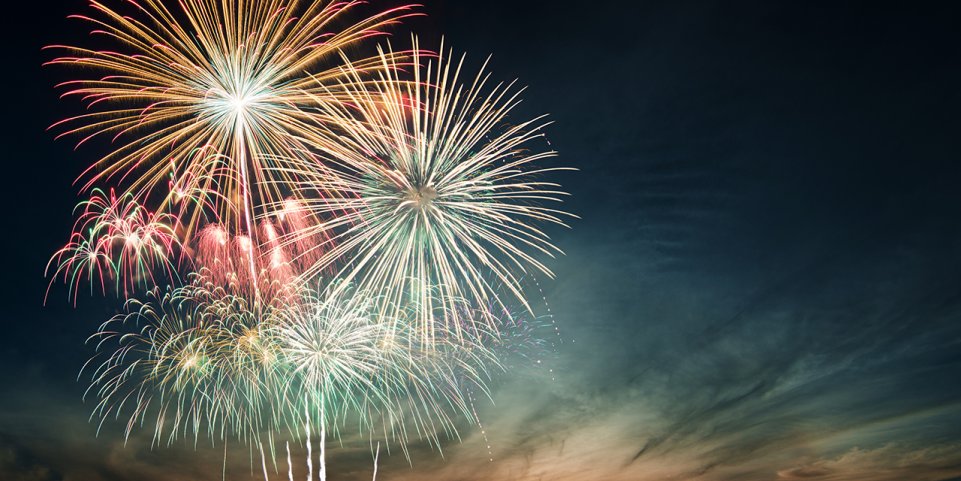
- Fireworks and public dances: August 1y
Top 5 reasons to travel by train this summer
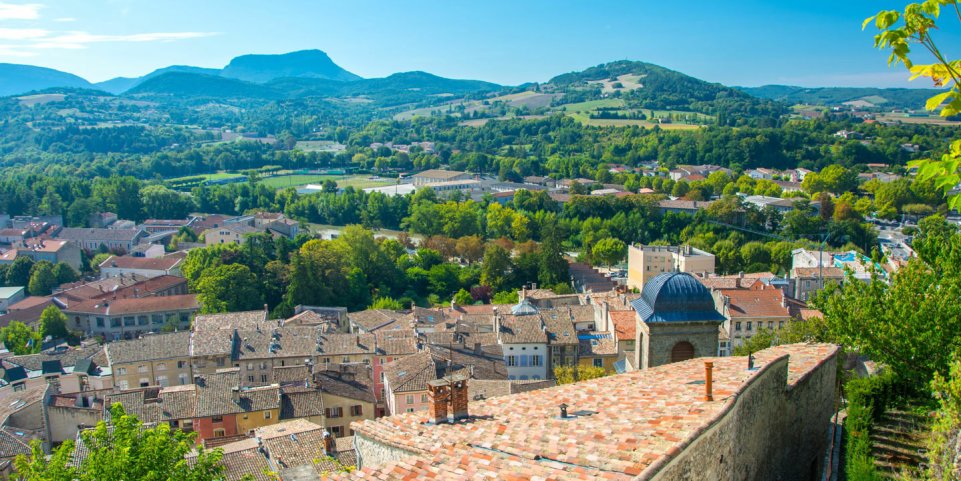
Take the train to relax with nature
Holidays in the Drôme
Take the INTERCITÉS train from Paris to Briançon and visit the Drôme region. At each stop, you’ll find an authentic village, markets selling local specialities, and surrounding areas with all kinds of activities on offer.
Located between Valence and Montélimar, Crest is a small medieval town that comes alive in summer and is listed as one of the “Most Beautiful Detours in France”. Visit the market and try the Couve Crestoise, a “shortbread” cake that dates back to the 18th century.
The town of Die lies between Valence and Gap in the heart of the Vercors Regional Nature Park and has many gems to discover, including beautiful hiking trails and a canyon. At the activities centre, you’ll find a variety of fun things to try, such as “accrobranche” tree climbing courses, canyoning, canoeing, via ferrata, mountain biking, and caving.
Luc-en-Diois, to the south of Grenoble, boasts a number of historic remnants and a particularly interesting natural environment, with a bathing pool, rock climbing, a free via ferrata with a 200 m gradient, the Saut de la Drôme waterfall, and routes down the Drôme river to enjoy by bike or kayak.
Holidays in Centre-Val-de-Loire
The Centre-Val-de-Loire region is well known for its Loire châteaux, but it is also brimming with natural beauty. The Paris-Limoges INTERCITÉS train stops at destinations you might not have considered for your summer holiday.
Vierzon, on the doorstep of the Sologne region, is surrounded by forests. You can go boating or canoeing on the Canal du Berry, walk the paths of Ile Marie, and hike in the national forest. You can also visit the Vierzon Museum, devoted to the town’s industrial history.
The ancient town of Issoudun, in the Indre department, has some surprises up its sleeve inside its ramparts: Richard the Lionheart’s “White Tower” and a museum housing a special treasure, the only one of its kind in Europe: the Trees of Jesse. Grab your trainers and go canoeing or cycling along the trails in the Choeur-Bommiers forest.
Châteauroux, in the heart of the Berry region, is a “country town” with a rich heritage and just a stone’s throw from a trail for cycling or walking through the national forest.

Take the train to the beach
Do you want to go to the beach, do water sports, lie on a towel in the sun, and make sandcastles, all without having to drive for miles and sit in sweltering summer traffic jams? Did you know that several beaches are just a short train journey away?
Take the train to the seaside with your family
A number of seaside resorts have been awarded the Famille Plus label, guaranteeing fun and organised facilities for families.
Cap d’Agde is a seaside resort in Occitanie with the Famille Plus label. All kinds of water sports are available, but the special feature of Cap d’Agde is its infrastructure for families, including swimming pools, Aqualand, theme parks, miniature harbours, Club Mickey, and Dino Park.
Many of its Mediterranean beaches have also been awarded the Blue Flag. Between the town of Agde, its inlet and beach and the La Tamarissière district, there’s no shortage of summer activities to enjoy: authentic markets, nature walks, cycling along the Canal du Midi, birdwatching at the Bagnas Nature Reserve, and more.
At the other end of the country in northern France, Le Touquet-Paris-Plage in the Pas-de-Calais region is the ideal place for families wanting to escape the heat. Beach clubs and the “Festival des Tout-Petits” from mid-July to mid-August make for a dream holiday for children.
As well as all the water-based activities and lounging on the beach, teenagers will love partaking in horse-riding, catamaran, golf, land sailing and tennis lessons. Cultural and gourmet workshops and heritage awareness-raising activities are also available for educational days with a difference.
Blue Flag beaches accessible by train
Cassis is 25 minutes by train from Marseille, with a train every 30 minutes. You’ll find yourself in the Calanques National Park, between the cliffs of Cap Canaille and the famous “calanques” rocky coves.
The charm of the narrow streets and squares, the pretty little port and its quayside terraces set the tone for your holiday. Cassis’ main beach is in the heart of the village, at the foot of the ancient medieval castle. The bathing area is supervised by a lifeguard and offers a wide range of water sports.
La Rochelle is a town known for its port. Its beaches also make it a lovely seaside resort. Concurrence beach is perhaps the favourite among children, with merry-go-rounds, swings, mini-golf, a bouncy castle and bumper cars.
Minimes is the town’s largest beach, with a view of the “Phare du Bout du Monde” (“lighthouse at the end of the world”). After a pleasant stroll from the town centre, you arrive at Chef de Baie Blue Flag beach with fine sand bordered by a lawn.
A beach holiday and much more
The town of Le Havre, in Normandy, is famous for its Perret architecture, but it’s also a seaside resort! The 10-minute tram journey from the station takes you to the seafront, lined with terraces.
The white pebble beach stretches on for miles, all the way to Sainte-Adresse, which offers a complete change of scenery. “Un été au Havre” is the cultural event of the summer, taking place from 28 June to 21 September 2025. “L’art parcourt la ville” is the name of the event’s 8th edition, which will feature a wide range of artistic experiences from exhibitions and works of art installed throughout the city, to various events, festivals and more.
Head for Cannes, on the Côte d’Azur, to admire the extraordinary fireworks from the beach at the Festival d’Art Pyrotechnique. It’s one of the finest sound and light shows in the world.
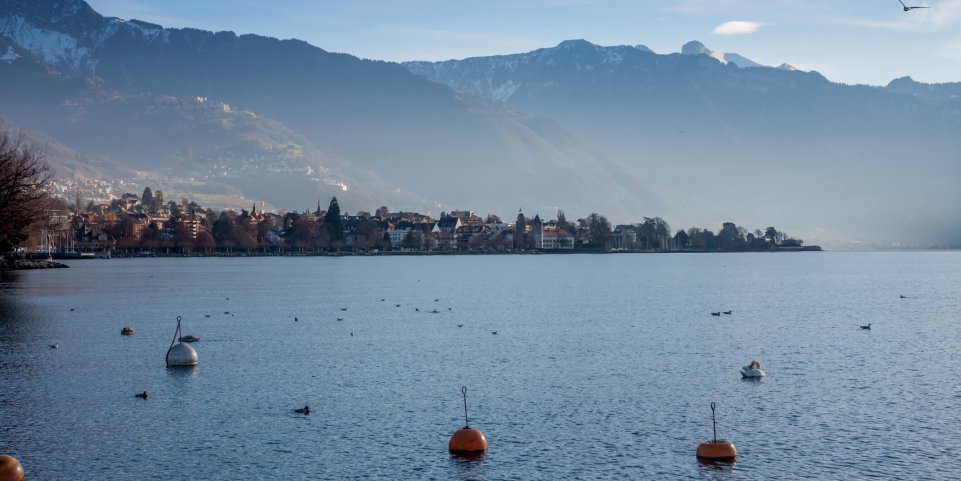
Take the train to get a breath of fresh air in the mountains
Lounge by a lake
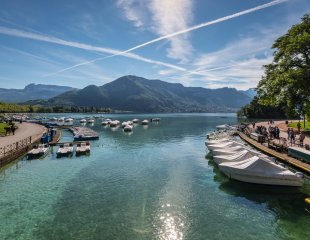
In Haute-Savoie, Evian-les-Bains, on the shores of Lake Geneva and surrounded by mountains, is also a spa town perfect for pampering yourself. It has some particularly popular Savoyard culinary specialities too.
There are so many excellent reasons to spend your holiday in Evian-les-Bains, including the town’s 19th-century charm, the summer exhibition at the Palais Lumière, the hiking trails around Lake Geneva, the magical mineral spring water, the Blue Flag beach, the outdoor swimming pool, and the water sports centre on Lake Geneva (the largest lake in Western Europe).
What’s more, Evian-les-Bains enjoys a mild microclimate and the peace and tranquillity that many yearn for.
Get a head for heights
Briançon, in the Southern Alps, is the highest town in France, at 1,326 m, and the place where five valleys meet. The town is listed as a Town of Art and History, fortified by Vauban in the 18th century and a UNESCO World Heritage Site.
As well as cultural and heritage tours, you can make the most of the surrounding countryside by taking the cable car that links the town to Serre-Chevalier, where mountain walks, mountain biking and other outdoor activities such as horse riding, paragliding, canoeing and rafting are on offer.
A bright yellow train!
- The “Train Jaune” (“yellow train”) takes you to Latour de Carol, at an altitude of 1,209 m in the Pyrénées Orientales, close to the Spanish border.
- This former 18th-century rustic, farming village is the terminus of the Train Jaune, which goes from village to village with the summits of the Pyrenees in the background. Latour de Carol also offers the chance to hike mountain trails, relax in hot springs and take part in a wide range of sporting activities such as via ferrata and kayaking.
Take the train and get a change of scenery in Europe
Turin, Italy
Turin is the capital of Piedmont, in north-west Italy. The city is full of interesting places to visit, including the Royal Residences and arcades inherited from the House of Savoy, as well as the Egyptian and film museums, and the market, said to be one of the largest in Europe. There are also plenty of excursions in the surrounding area to immerse yourself in Piedmontese nature: on foot, by bike or even on horseback, follow the Langhe trail, a UNESCO World Heritage site. Then, head off to Lake Maggiore for some water sports. Raft down the Susa Valley or cross the world’s longest Tibetan bridge, stretching 478 metres, over the gorges of San Gervasio at Cesana-Claviere.
Spain’s Costa Brava
Figueras, the city of Dali and his Theatre-Museum, is a must-see. The underground passages at the Castle of Sant Ferran, Europe’s largest fortress, are also very impressive. Take a bus to Portbou and find a beach or wild coves to swim in the Mediterranean. The seaside village of Llança is 20 km from Figueras.
Girona, in the north-east of Spain, has stood the test of time. Its charming little streets are full of mystery, lined with colourful houses and dotted with bell towers.
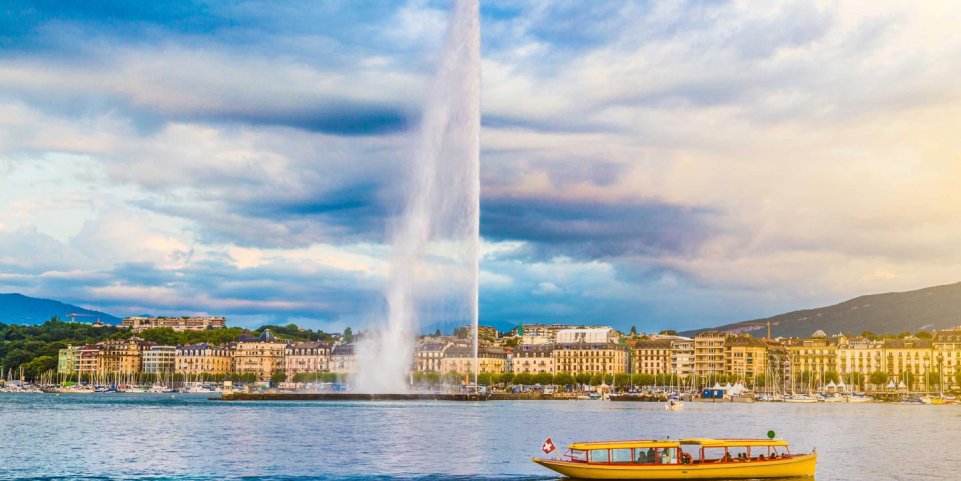
Geneva, Switzerland
Geneva, on the south-western shores of Lake Geneva, is a nicely sized city where everything can be reached on foot. The narrow streets of the old town have a lovely charm, its “Jet d'Eau” fountain on the lake is a great spot for photos, and institutions such as the Palais des Nations are well worth a visit. But what you’ll really love is the Bains des Pâquis beach, where you can bask in the sun and bathe in the water. Finally, take a hike up Mont Salève, 1,379 metres above sea level, for a breathtaking view of the Alps.