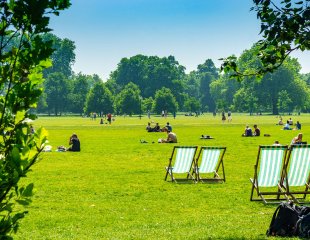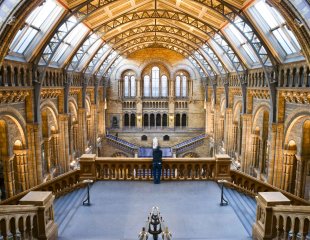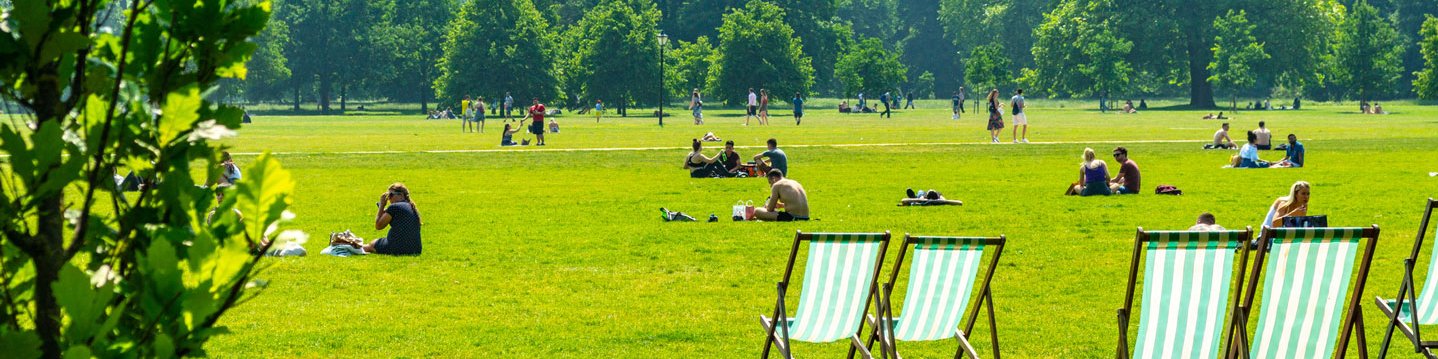
London's parks and gardens are little bits of countryside, places to visit for their character, to stroll, picnic, play a sport, or watch the birds and squirrels. They offer a great alternative way to discover London.
Book a train ticket
Book a train ticket

Hyde Park, the largest
A brief history
Once the property of Westminster Abbey, and later the royal hunting grounds of Henry VII, Hyde Park, along with Kensington Gardens to the west, forms the largest park in central London, measuring 2.5 km by 2 km!
After its creation in the 17th century, this immense natural area became a meeting place for socialites, who met in masks and fought duels here. In the eighteenth century, the park was redesigned around the man-made Serpentine lake with a bridge built to create a link to the new royal residence of Kensington Palace.
To discover in Hyde Park
At the Northern corner of Hyde Park, the neoclassical Marble Arch replaced the sinister Tyburn gallows in 1851. Not far away, speakers come to Speaker's Corner every weekend to address onlookers.
On the Kensington Gardens side, the Serpentine Gallery hosts exhibitions of contemporary art. But children prefer the pirate ship at the Diana Memorial Playground and the statue of Peter Pan, surrounded by fairies and squirrels!
Activities in Hyde Park
Londoners and tourists alike come here for picnics and sunbathing on the lawns. You can also canoe on the lake, go horse riding on Rotten Row or enjoy live music.
How to get to Hyde Park?
Subway: Knightsbridge and Hyde Park Corner stops on the Piccadilly Line or Lancaster Gate, Queensway, and Marble Arch stops on the Central Line.
Bus: Routes 2, 6, 7, 8, 9, 10, 14, 15, 16, 19, 22, 30, 36, 38, 52, 73, 74, 82, 137, 148, 274, 390, 414 and 436.
St. James's Park, the most royal
A brief history
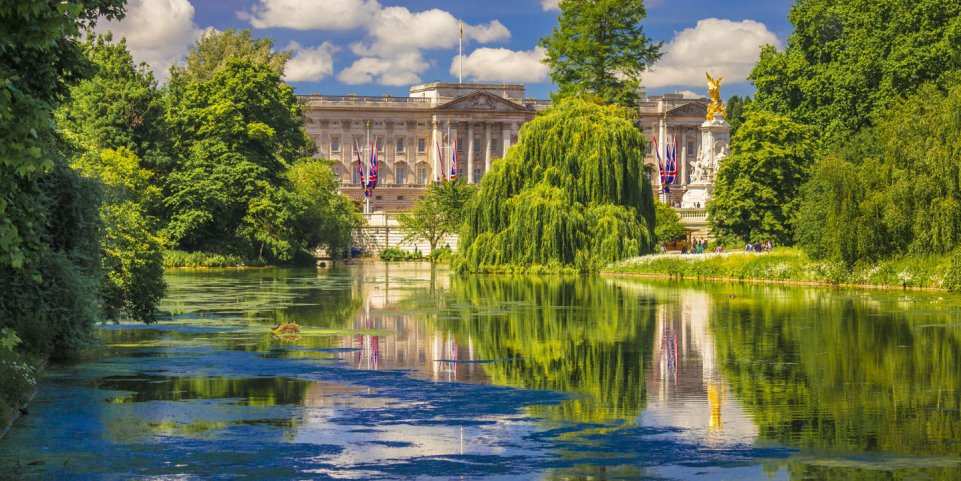
Between Buckingham Palace and Horse Guards Parade, Saint James's Park is at the heart of every official ceremony in London: coronations, weddings, military parades…
During the reign of Henry VIII, in the early 16th century, the marshlands were reclaimed and turned into royal hunting grounds. It is the oldest of the Royal Parks, the smallest, and the least wild. Over the years, the English monarchs developed the area into their favourite promenade.
To discover in Saint James's Park
Every year, the flowerbeds of the Palaces are filled with 12,000 red geraniums... to match the tunics of the Life Guards regiment!
At the centre of the park is a small lake, its banks lined with deckchairs and a small bandstand. Many birds have taken up residence on the two islets, including a colony of pelicans. Attention bird lovers: they are fed at 2.30 pm. The view from the blue bridge is perfect for a great photo.
To the south, the beautiful tree-lined avenue of Birdcage Walk recalls the huge aviary installed in the 17th century by King James I.
On the other side of the Mall, Green Park adds a wilder touch, with its meadows and woodland walkways. In the past, nobles would come here to fight duels…
Activities in Saint James's Park
You can picnic, sunbathe on the lawns, and cycle. A bandstand plays host to brass bands in summer. There’s also a restaurant with a lawn-covered roof. Saint-James's Café is perfect for a break amidst nature.
How to get to Saint James’s Park?
Subway: St. James's Park stop on the underground lines: District and Circle; Westminster stop on the Jubilee, District, and Circle lines.
Bus: Routes 3, 11, 12, 24, 29, 53, 77A, 88, 91, 148, 159, 211, and 453.
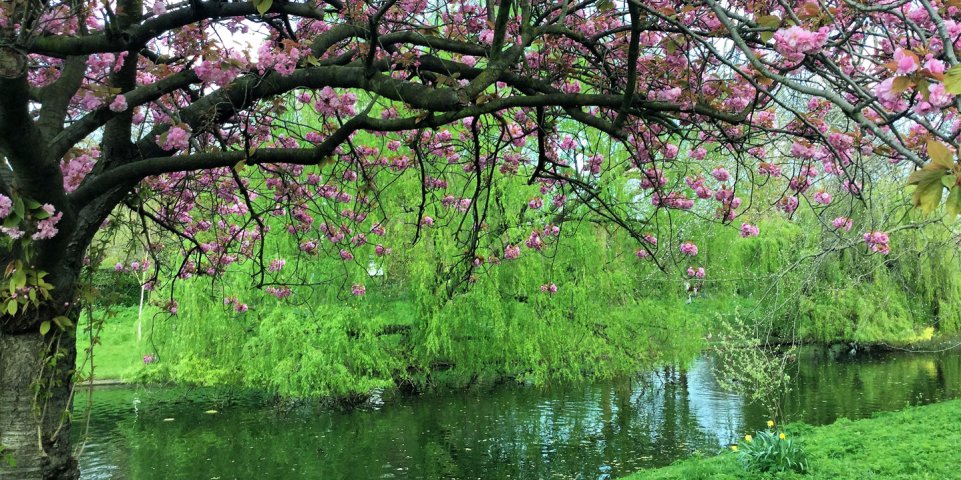
Regent's Park, the most poetic
A brief history
In North London, this royal park is surely one of the most charming gardens in the English capital. Regent's Park was designed in 1814 on a former royal hunting ground by John Nash, the architect and town planner of the Regent and the future King George IV. The idea was to create a palace and a series of houses "overlooking the garden" for the prince and his friends. The palace never saw the light of day, but Nash's elegant columned townhouses called terraces adorn the south side of the park.
To discover in Regent's Park
Queen Mary's former botanical garden boasts a superb rose garden featuring some 400 varieties. The terraces of the small cafés are very pleasant after a stroll along the alleys lined with English-style landscaped gardens.
The park is home to a number of fine residences, including the official residence of the US ambassador to the UK and several neoclassical townhouses.
With its woodpeckers, grey herons and peregrine falcons, Regent's Park is also a birdwatcher's paradise.
Beyond the Regent's Canal, Primrose Hill offers fine views of London and the Thames at sunset.
Activities in Regent's Park
In summer, plays by Shakespeare are staged in the open-air theatre. The large lake is ideal for a boat trip in fine weather. There are also sports fields (field hockey, rugby, and rowing) and playgrounds…
Beatles fans can make a pilgrimage to see Paul McCartney's former home and the nearby Abbey Road recording studios.
To the north is the London Zoo, where you can see monkeys in a tropical forest recreated under glass.
How to get to Regent's Park?
By subway: Regent's Park station on the Bakerloo line; Great Portland Street station on the Hammersmith & City, Circle, and Metropolitan lines; Baker Street station on the Hammersmith & City, Circle, Jubilee, Metropolitan, and Bakerloo lines.
By bus: routes 2, 13, 18, 27, 30, 74, 82, 113, 139, 189, 274, 453 and C2.
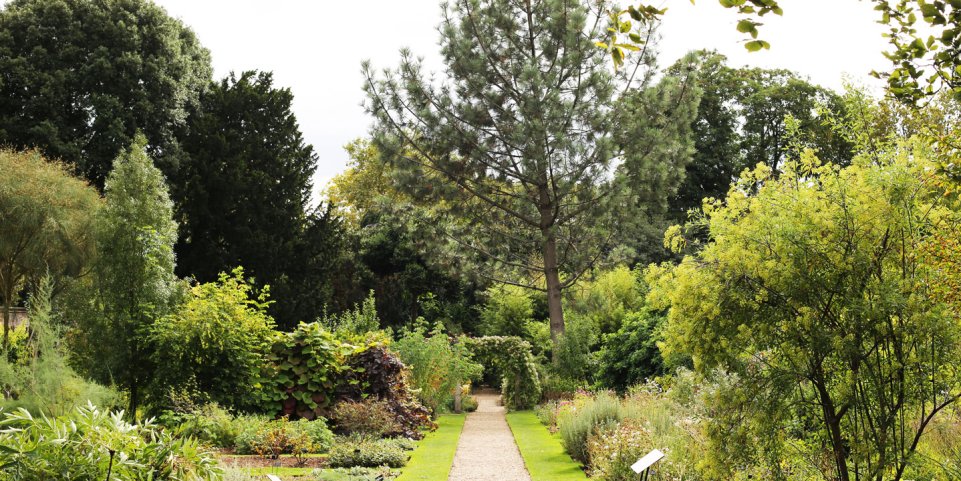
Chelsea Physic Garden, the cleverest
A brief history
Au cœur du quartier chic de Chelsea, près des rives de la Tamise, se cache un étonnant jardin botanique londonien. Grâce à ses murs clos et à la proximité de la rivière, il bénéficie d’un micro-climat favorable à des plantes venues du monde entier. Créé en 1673 par la corporation des apothicaires, le Chelsea Physic Garden est le rendez-vous des férus de botanique et de médecine. C’est ici, par exemple, qu’ont été cultivés les premiers plants de Camelia Sinenis chinois, pour développer l’industrie du thé en Inde.
To discover in the Chelsea Physic Garden
La visite permet aujourd’hui de découvrir plusieurs jardins à thème : médecine naturelle, ethno-botanique, alimentation, teinturerie, aromathérapie…
Son jardin de rocailles est le plus ancien jardin anglais consacré aux plantes alpines. Il abrite le plus grand olivier fructifère en Grande-Bretagne, protégé du froid par les hauts murs en briques du jardin, ainsi que sans doute le plus septentrional des pamplemoussiers poussant à l'extérieur.
Activities in Chelsea Physic Garden
Avis aux gourmands : le joli manoir en briques du jardin abrite un délicieux « Café » proposant tartes, salades et desserts « maison », comme les scones à la lavande et à la crème fouettée.
Des activités en famille sont proposées pour découvrir les plantes.
Tout proche, le jardin du Ranelagh du Chelsea Royal Hospital accueille tous les ans en mai le fameux Chelsea Flower Show. Organisé par l’Académie royale d’horticulture, l’événement réunit des pépiniéristes du monde entier, qui présentent leurs dernières productions et leurs méthodes de travail à des milliers de visiteurs. Au menu : ateliers pour les enfants, reconstitutions de jardins, animations…
How to get to Chelsea Physic Garden?
Subway: Sloane Square on the District and Circle lines
Bus: route 170 (towards Victoria train station)
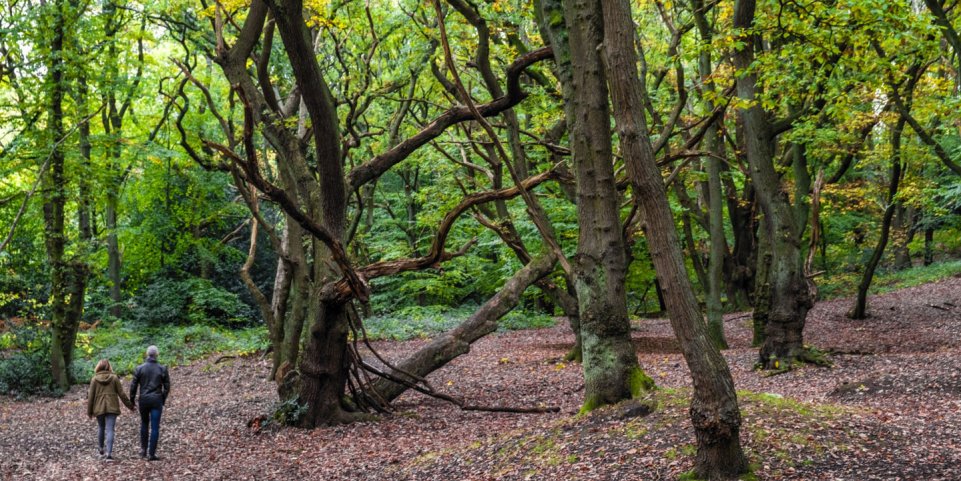
Hampstead Heath, the wildest
A brief history
Hampstead Heath Park is 6 km north of central London. This huge park covers 320 hectares! And because it's on a hill (Parliament Hill), the view of London, the London Eye, and the buildings of the City is impressive. It has large forests, with century-old trees and many wild paths. It became the summer residence of landscape painter John Constable from 1819, and it was here that he began making cloud studies in 1821.
To discover in Hampstead Heath
Abundant wildlife lives free in this park, which is also a nature reserve. The zoo is free, featuring a collection of exotic birds and mammals such as lemurs.
From spring to autumn, the Butterfly House offers visitors the chance to see a wide variety of tropical species and learn all about the cycle of their birth and growth.
The cemetery is worth a visit for its incredible architecture. Karl Marx is buried here. There is also a literary museum dedicated to the work of John Keats, and a 17th-century house with a walled garden. It has a number of paintings and instruments to admire.
Activities in Hampstead Heath
Because it's so big, it's perfect for a bike or horse ride.
It has many ponds where swans and ducks live side by side. You can take a refreshing dip in one of the three bathing ponds. Other ponds are used for fishing, boating, and wildlife conservation.
There are plenty of sporting activities on offer, including an outdoor swimming pool, athletics tracks, a rugby pitch, four football pitches, two cricket pitches, two tennis courts, a croquet lawn and even a bowling alley. There are also exhibition spaces, restaurants, and cafés.
How to get to Hampstead Heath?
By subway: Golders Green (Northern Line). Golders Hill Park and the Heath Extension; Hampstead (Northern Line). Vale of Health, East Heath, and Hampstead Ponds; Kentish Town (Northern Line). Parliament Hill and Highgate Ponds; Hampstead Heath (Overground Line). East Heath and Hampstead Ponds; Gospel Oak (Overground Line). Parliament Hill, Highgate Ponds, and the athletics track.
By bus: Routes C2, H3, C11, 24, 46, 168, 210, 214, and 268 stop in various parts of the park.
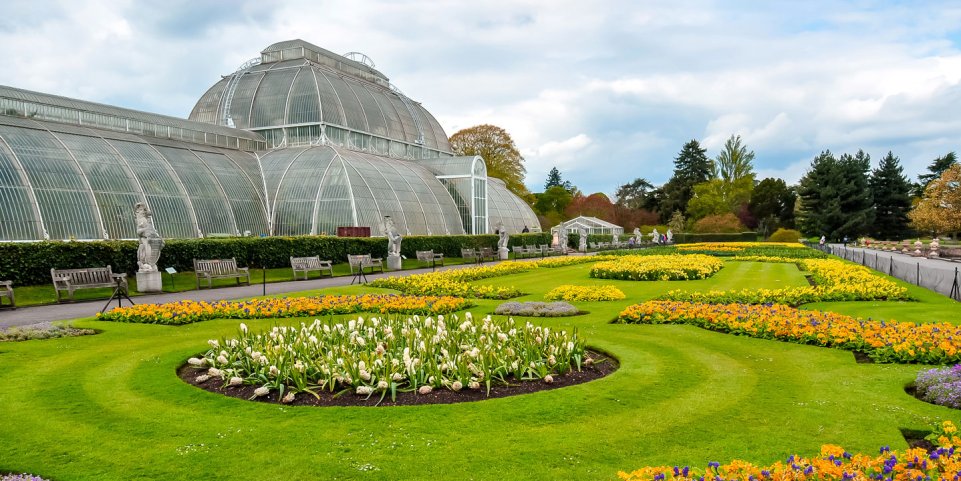
The Royal Botanic Gardens, Kew
A brief history
To the west of London, in the Richmond-upon-Thames district, the Royal Botanic Gardens at Kew are incredible in full bloom in May-June, especially when you take a stroll along Rhododendron Dell. Covering an area of 121 hectares, you'll find one of the largest plant collections in the world, with over 30,000 species. Their herbarium is also one of the largest in the world (7 million specimens).
The Royal Botanic Gardens at Kew were founded in 1759 by Princess Augusta, mother of King George III. They are on UNESCO's World Heritage List.
To discover in the Royal Botanic Gardens at Kew
Each of the Victorian greenhouses has its own special character: Waterlily House is filled with water lilies; Temperate House is dedicated to plants from Mediterranean climates; Palm House is home to palms and tropical plants from all over the world, and so on.
Also worth seeing: the arboretum, the bamboo garden, and the Japanese garden with its pagoda and bonsai house.
Nearby Richmond Park is home to a colony of 650 deer that are not shy.
Activities at the Royal Botanic Gardens, Kew
You can visit Kew Palace, a Dutch-style brick mansion that was the summer residence of King George III and his family in the 19th century. A tea room has been set up in the Orangery.
How to get to the Royal Botanic Gardens at Kew?
Subway: Kew Gardens (District Line)
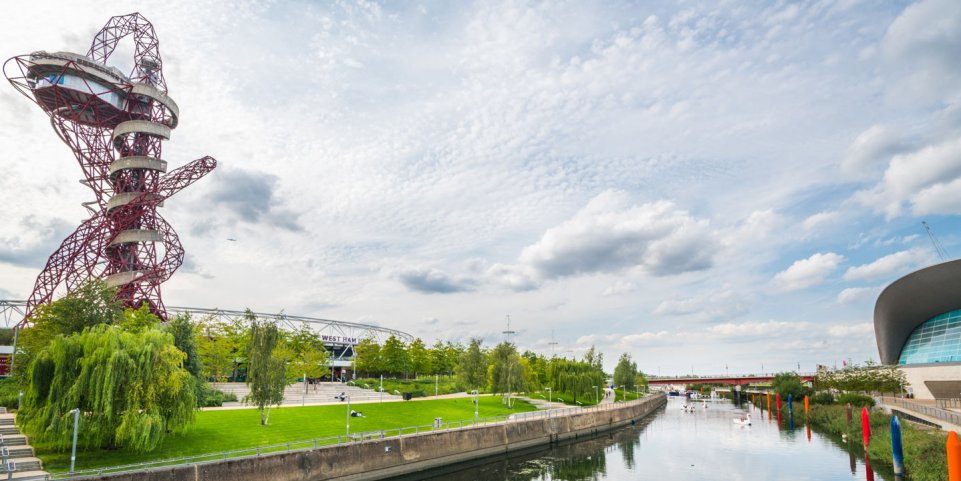
Queen Elizabeth Olympic Park
A brief history
The London Olympic Park underwent a facelift and reopened in 2014 as the Queen Elizabeth Olympic Park, a sports complex and public park in Stratford, East London. Covering 220 hectares, it is the largest public space to open in London in 100 years. Queen Elizabeth Olympic Park was built especially for the 2012 Summer Olympics, with the London Stadium, the Olympic swimming pool, and the Olympic Village.
To discover in Queen Elizabeth Olympic Park
The park was transformed into a vast landscaped area, including the Olympic facilities. The mini-gardens represent different climates such as the Americas, the Mediterranean, South Africa, etc. The park also has extensive promenades with over 6 km of canals and rivers.
For a good view of the park, climb the ArcelorMittal Orbit (114.5 m high) designed by Anish Kapoor, Britain's largest public artwork.
Activities at Queen Elizabeth Park
In fine weather, children can have fun with the interactive fountains. There is also an adventure playground with rope bridges, swings, etc.
Designed for the Olympic Games by the architect Zaha Hadid, the aquatic centre is highly recognisable with its undulating roof. The large windows let sunlight into the pools (2 x 50 m pools and 1 x 25 m pool). The Olympic facilities are accessible, including the Copper Box Arena, now a multi-sports centre, and the velodrome, the field hockey pitch, and the tennis court.
How to get to Queen Elizabeth Park?
Subway: Stratford (Central Line, Jubilee Line, Overground, DLR)
Bus: 388, 308, 339, 108 and 86, 97, 104, 108, 158, 238, 241, 257, 262, etc.