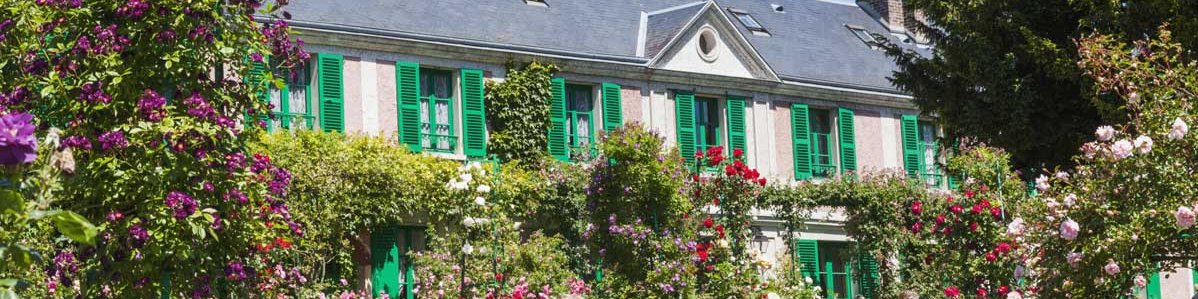
Giverny is famous for the magnificent paintings Claude Monet did of his house and gardens there. The Japanese footbridge and the water lilies all remain untouched by time. Follow in the footsteps of one of the greatest painters of the Impressionist movement.
Book a train ticket
Book a train ticket
Many plein air painters were attracted to Normandy, located just a one-hour train ride from Paris, for its light. Monet first chose Giverny as a holiday home for his family. The property rapidly became a retreat dedicated to painting. For the rest of his life, he worked on his “waterscapes” there, each one done at different hours of the day and in different seasons.
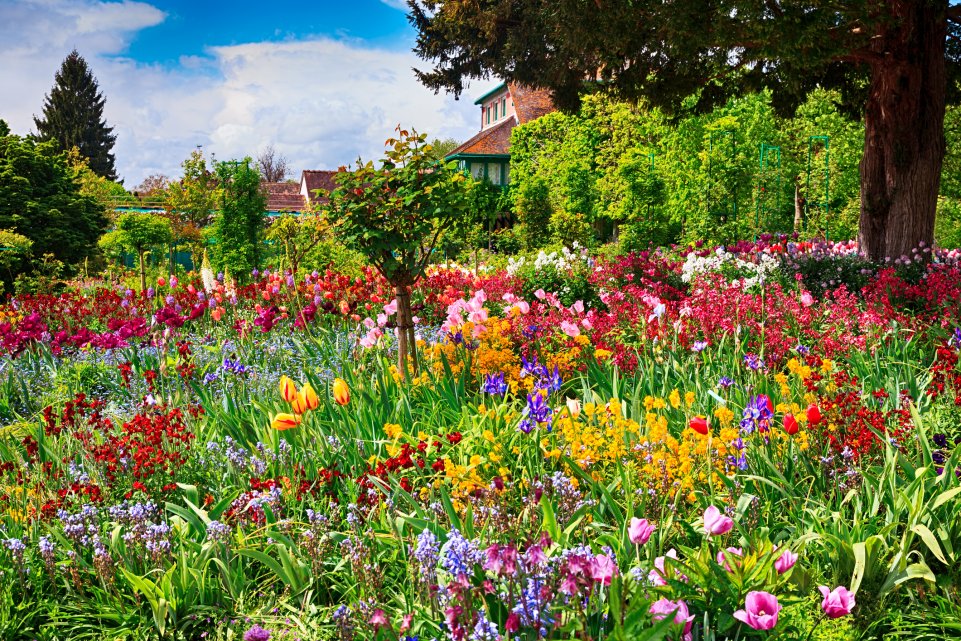
What to see when visiting Monet’s House in Giverny
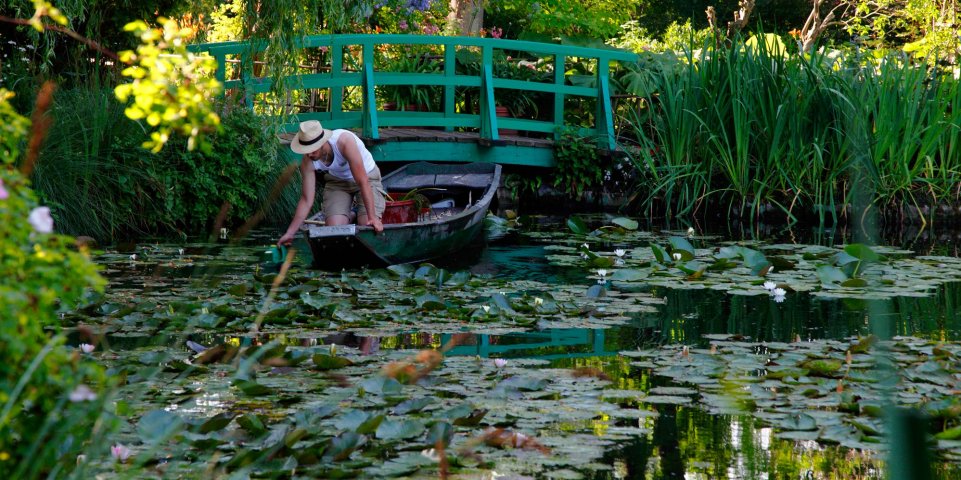
Monet’s garden
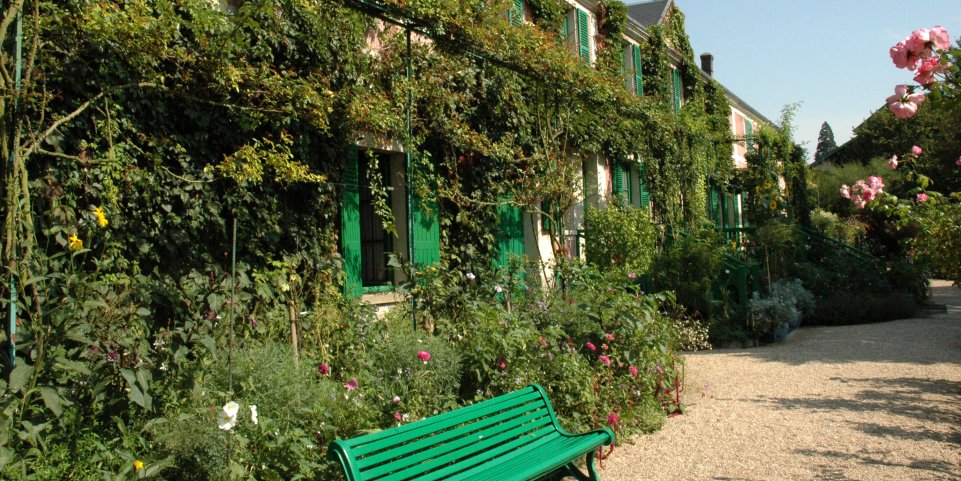
In a quest for new subjects to paint, Monet had a pond dug and part of the Epte diverted to create a Japanese garden in which everything was planned down to the last detail: aquatic plants including the famous water lilies were meticulously cultivated so that he could observe their reflections in the water, and a stone bridge based on Hokusai’s woodblock prints was built to give him something to paint when the plants weren’t blooming.
The garden is still as beautiful as ever, and you can enjoy a pleasant stroll through the grounds as you observe all the small details of nature that make it so fascinating for painters and visitors alike.
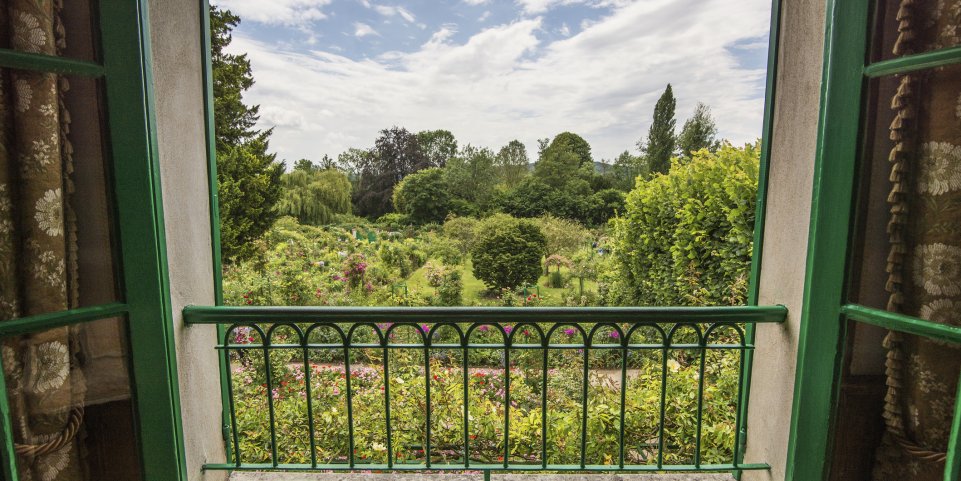
The visit
It is apparent that the Monet family lived in this house; indeed, it feels as if they could come back in from a walk at any moment. The visit begins with the little blue sitting room used as a reading room, then takes you through the pantry to the artist’s first workshop where some sixty reproductions of Monet’s works are on display. The dining room’s yellow walls are adorned with a collection of Japanese woodblock prints, and the kitchen, with its blue tiles from Rouen, is as welcoming as ever.
On the first floor are the private apartments: Monet’s bedroom, with its walls covered in reproductions of works by Cézanne, Renoir, Signac and Caillebotte, Monet’s bathroom, the bedroom and adjoining bathroom that belonged to Alice (Monet’s second wife), a sewing room, and the bedroom that belonged to Blanche Hoschedé-Monet (Claude Monet’s stepdaughter and a painter herself).
The visit of what is now the Claude Monet Foundation, with its numerous photos, retraces all the steps of the famous artist’s experiments. To see the original works, however, you will need to visit various museums in Île-de-France and Normandy.
To finish off your visit
Just next door to Monet’s House, the Impressionist Museum is home to a permanent collection and two temporary exhibitions that change each spring and autumn.
- Impressionist Museum
- 99 rue Claude Monet
- 27620
- Giverny
- France
- Price info: You can buy a combined ticket for the Impressionist Museum and Monet’s Garden — it’s free for visitors under 7 years of age.
Did you know?
Monet’s paintings fascinated the artistic community, and between 1885 and 1915, Giverny welcomed more than a hundred artists from all over Europe and especially the United States.
An essential stop for food lovers
Don’t miss the Hotel-Restaurant Baudy (rue Claude Monet), a gathering place for passing artists and the first inn in Normandy to serve tea, pudding and Boston baked beans!
- Monet’s house
- 84 rue Claude Monet
- 27620
- Giverny
- France
- +33 232512821